 Skip to content
Table of Contents

Chips
1. Introduction to Ball Spline Bearing Performance
Why Performance Matters in Linear Motion Systems
In linear motion assemblies, performance is not just a fancy spec-sheet number, it is the difference between a machine that hums along like a well-tuned pickup and one that rattles itself to pieces before the warranty ink dries. Ball spline bearings carry both linear loads and torque simultaneously, which means any deficiency shows up fast and usually in an expensive way. When throughput, positioning fidelity, and uptime are on the line, the bearing becomes a mission-critical component rather than background hardware. Ignore performance, and the whole system can turn into a mechanical soap opera nobody asked for.
Key Metrics Used to Evaluate Performance
Engineers typically look at dynamic load rating, permissible moment load, and travel life as baseline indicators, but that is just the opening act. Frictional resistance, rigidity under preload, and rotational torque capacity provide a more nuanced performance portrait that separates premium assemblies from bargain-bin parts. Noise, vibration, and temperature rise also serve as indirect barometers of internal health, revealing tribological inefficiencies hiding beneath the surface. When all these metrics align, you know the design is firing on all cylinders.
Common Misconceptions About Ball Spline Bearings
A common myth is that ball spline bearings are just linear bearings with fancy grooves, which is like saying a Swiss watch is just a clock with attitude. Their ability to transmit torque while allowing linear motion introduces complex load paths that standard linear bushings simply cannot handle. Another misunderstanding is that higher preload always equals better performance, when in reality excessive preload can choke efficiency and accelerate wear. Thinking these components are plug-and-play without system-level consideration is a rookie mistake.
2. Anatomy of a Ball Spline Bearing
Core Components and Their Functions
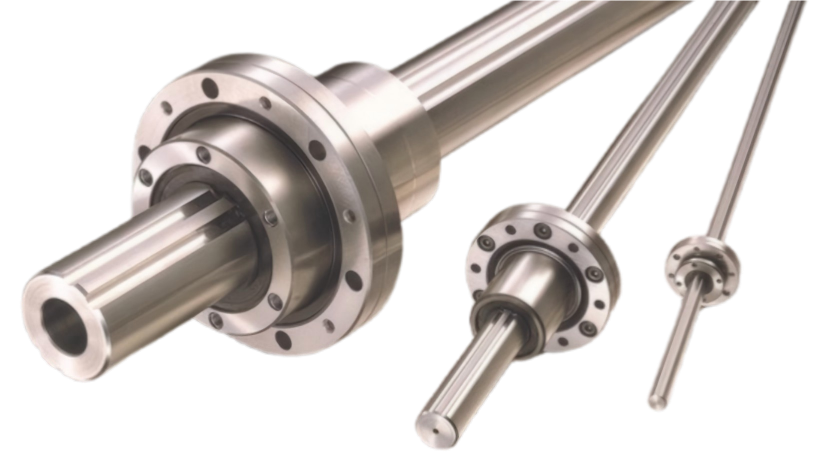
A ball spline assembly typically consists of a grooved shaft, a spline nut, load-carrying balls, and recirculation elements that keep the motion continuous and civilized. The shaft provides precision-ground raceways that guide both linear translation and torque transmission in one tidy package. Inside the nut, load zones and return channels choreograph ball motion with almost balletic precision. Each element has to pull its weight, or the whole mechanism starts acting squirrelly.
How Spline Grooves Influence Motion
Spline grooves are not decorative machining flourishes, they define load distribution, contact angles, and torque capacity in a deeply consequential way. The geometry determines how many balls share the load and how evenly forces are disseminated along the contact interface. Poor groove geometry can cause stress concentrations that behave like tiny demolition crews inside the bearing. Well-designed grooves, on the other hand, deliver smooth motion that feels downright luxurious.
Role of Ball Circulation Paths
Ball circulation paths allow endless travel without the balls piling up like traffic at rush hour, which keeps motion continuous and predictable. These return channels must be dimensionally precise to avoid skidding, jamming, or impact loading that shortens service life. The internal kinematics resemble a carefully timed conveyor loop, where every ball has a job and a schedule. When circulation runs clean, the system glides; when it does not, things go south in a hurry.
3. Material Choices and Their Impact
Shaft and Nut Material Options
Shafts are commonly made from high-carbon bearing steels or alloy steels that undergo rigorous heat treatment to achieve a martensitic structure with serious backbone. The nut body often uses similarly robust alloys, chosen for dimensional stability and fatigue resistance under cyclic loading. Material purity and inclusion control matter more than folks realize, because microscopic defects can turn into macroscopic failures. Skimp here, and you are building on sand.
Ball Materials and Surface Hardness
Load-carrying balls usually feature through-hardened chrome steel or advanced ceramics in specialized applications, each bringing a different flavor of performance. Hardness must be high enough to resist plastic deformation, yet paired with surface finish that supports elastohydrodynamic lubrication. Ceramic balls reduce mass and can handle higher speeds, though they come with cost and compatibility considerations. The wrong ball choice is like putting bicycle tires on a semi-truck.
Coatings and Treatments for Durability
Surface treatments such as black oxide, hard chrome, or advanced thin-film coatings can enhance corrosion resistance and reduce adhesive wear. Case hardening, nitriding, or induction hardening refine the surface layer while maintaining a tough core, a combination that laughs in the face of fatigue. These treatments also influence friction coefficients and lubricant retention. Done right, they add years of life without breaking a sweat.
4. Load Capacity Fundamentals
Radial vs Torque Load Handling
Ball spline bearings juggle radial forces and torsional moments at the same time, which is where their design really earns its keep. Radial loads press the balls into the raceways, while torque loads try to twist the nut relative to the shaft. The interplay between these forces demands robust contact geometry and generous load-sharing. It is a mechanical balancing act that does not tolerate sloppy design.
Static and Dynamic Load Ratings
Static load ratings reflect the maximum load that can be applied without causing permanent deformation, a kind of structural red line. Dynamic load ratings, by contrast, tie directly to fatigue life under rolling contact conditions. Engineers use these values to estimate travel life through well-established life equations. Treat them as gospel, not suggestions.
Factors That Reduce Effective Load Capacity
Misalignment, contamination, and poor lubrication can quietly slash load capacity even when catalog numbers look comforting. Shock loading and improper mounting can introduce localized stress spikes that undermine fatigue life. Elevated temperatures also degrade material properties and lubricant performance. In the real world, capacity is earned, not assumed.
5. Precision and Positioning Accuracy
Relationship Between Fit and Accuracy
The fit between shaft and housing influences alignment, rigidity, and ultimately positioning precision in a very real way. Too loose, and you get chatter and positional drift; too tight, and you introduce distortion and excess friction. Proper fits maintain geometric integrity under load. It is a Goldilocks situation, not too hot, not too cold.
Manufacturing Tolerances Explained
Tolerance classes define allowable deviations in groove geometry, shaft straightness, and roundness, all of which stack up in the final assembly. Even small errors can snowball into measurable positioning inaccuracies over long travel distances. High-precision grades command higher cost but deliver performance that justifies every penny in critical systems. Precision here is not vanity, it is survival.
Repeatability in High-Precision Systems
Repeatability measures how consistently the system returns to a given position, and ball spline bearings with tight preload shine in this arena. Elastic deformation under load must remain predictable and minimal. Consistent ball-to-raceway contact ensures motion that behaves the same today as it did yesterday. That reliability is pure gold in automation.
6. Friction Characteristics and Efficiency
Rolling Friction vs Sliding Friction
Ball spline bearings exploit rolling contact, which drastically reduces friction compared to sliding interfaces. Rolling elements generate less heat and require less drive force, boosting system efficiency. However, micro-sliding can still occur under certain load conditions. Managing that nuance separates decent performance from stellar performance.
How Design Affects Energy Loss
Contact angle, ball diameter, and preload all influence internal friction and therefore energy consumption. Overly aggressive preload can raise friction torque to the point where efficiency takes a nosedive. Thoughtful design balances stiffness with smooth motion. Efficiency gains here ripple through the entire machine.
Performance at Different Speeds
At low speeds, boundary lubrication conditions can dominate, making surface finish and lubricant chemistry critical. At higher speeds, centrifugal forces and lubricant churning introduce additional considerations. Thermal expansion also begins to play a more prominent role. Speed changes the game, so design cannot be one-dimensional.
7. Lubrication Secrets for Peak Performance
Types of Lubricants and Greases
Greases with extreme-pressure additives are common, though oils may be preferred in high-speed or high-temperature scenarios. Base oil viscosity and thickener type influence film formation and retention. The right lubricant acts like a microscopic shock absorber and heat manager. The wrong one is just along for the ride.
Lubrication Intervals and Methods
Relubrication intervals depend on load, speed, temperature, and environmental contamination levels. Automatic lubrication systems can provide consistent delivery and reduce human error. Under-lubrication is a silent killer, while over-lubrication can cause churning and heat buildup. Balance is the name of the game.
Consequences of Poor Lubrication
Insufficient lubrication leads to metal-to-metal contact, adhesive wear, and premature fatigue spalling. Friction rises, temperatures climb, and things spiral downhill fast. Eventually, you get noise, vibration, and failure that nobody enjoys diagnosing. Good lubrication is cheap insurance.
8. Installation Best Practices
Shaft Preparation and Handling
Shafts should be clean, burr-free, and handled like precision components, not fence posts. Even minor nicks can disrupt ball motion and start wear patterns early. Protective sleeves and careful handling go a long way. Respect the hardware, and it will return the favor.
Proper Mounting Techniques
Use proper tools and controlled force when installing nuts to avoid brinelling or raceway damage. Follow recommended torque specs and alignment procedures. Rushing installation is how gremlins get invited in. Take your time and do it right.
Common Installation Mistakes to Avoid
Hammering components into place or forcing misaligned parts together is a recipe for disaster. Neglecting cleanliness introduces contaminants that accelerate wear. Skipping preload verification can undermine system rigidity. These shortcuts always come back to bite.
9. Alignment and Its Performance Effects
Importance of Shaft Alignment
Alignment ensures uniform load distribution across the balls and raceways. Misalignment concentrates stress and increases friction. Good alignment keeps motion smooth and predictable. It is foundational, not optional.
Misalignment Symptoms and Risks
Symptoms include uneven wear, noise, vibration, and rising drive torque. Left unchecked, misalignment can cause early fatigue failure. It also undermines positioning accuracy. Small errors grow teeth over time.
Tools and Methods for Accurate Alignment
Dial indicators, laser alignment tools, and precision fixtures help dial things in. Proper mounting surfaces and machining accuracy support alignment efforts. Verification should be part of commissioning, not an afterthought. Measure twice, install once.
10. Preload and Rigidity Optimization
What Preload Does to Performance
Preload removes internal clearance, increasing stiffness and positional accuracy. It also raises friction and heat generation. The trick is applying just enough to stabilize motion. More is not always better.
Balancing Rigidity and Friction
High rigidity improves response but can hurt efficiency. Lower preload reduces friction but may allow deflection. The optimal point depends on application demands. Engineering is about trade-offs, plain and simple.
Selecting the Right Preload Level
Manufacturers offer preload classes to match different performance needs. Consider load spectrum, required accuracy, and drive capacity. Test data often guides the final call. Pick wisely and sleep better at night.
11. Sealing and Contamination Control
Seal Types and Configurations
Protection Against Dust and Debris
Contaminants act like grinding paste inside the bearing. Effective sealing and external shields keep the nasties out. Clean operation extends life dramatically. Dirt is the enemy.
Performance in Clean vs Dirty Environments
In clean rooms, low-friction seals and light lubrication shine. In harsh settings, heavy-duty seals and robust lubrication are mandatory. Design must match the battlefield. Otherwise, failure is just a matter of time.
12. Environmental Performance Factors
Operating Temperature Limits
Temperature affects material properties and lubricant viscosity. Excessive heat reduces hardness and film thickness. Thermal expansion can alter preload. Keep temperatures in the sweet spot.
Effects of Moisture and Corrosion
Moisture leads to corrosion, which roughens raceways and increases wear. Protective coatings and proper lubrication fight back. Ignoring corrosion is asking for trouble. Rust never sleeps.
Performance in High-Vibration Settings
Vibration can induce micro-movements that cause fretting and surface damage. Secure mounting and proper preload help mitigate issues. Shock loads require additional design margin. It is a rough-and-tumble world out there.
13. Maintenance Strategies for Longevity
Routine Inspection Checkpoints
Regular checks for noise, temperature, and smooth travel catch issues early. Visual inspection of seals and lubrication condition is essential. Small problems are easier to fix than big ones. Stay ahead of the curve.
Predictive vs Reactive Maintenance
Predictive methods use vibration analysis and temperature monitoring to forecast issues. Reactive maintenance waits for failure, which is usually costly. Data-driven maintenance improves uptime. Work smarter, not harder.
Extending Service Life Through Care
Proper lubrication, alignment, and load management add years of service. Avoiding shock loads and contamination pays dividends. Consistent care turns good components into great long-term performers.
14. Common Failure Modes and Prevention
Wear Patterns and Their Causes
Flaking, pitting, and spalling indicate rolling fatigue. Smearing suggests lubrication breakdown. Patterns tell a story if you know how to read them. Pay attention to the clues.
Ball and Raceway Damage Indicators
Indentations, discoloration, and surface cracks signal trouble. These defects increase noise and reduce life. Early detection allows corrective action. Ignore them and failure accelerates.
Design and Usage Changes to Prevent Failure
Improved sealing, better lubrication, and load reduction often solve chronic issues. Upgrading material or preload class can also help. Prevention beats replacement every time.
15. Testing and Performance Validation
Standard Testing Methods
Life testing, load testing, and torque measurement validate design assumptions. Controlled conditions isolate variables. Standards provide repeatable benchmarks. Testing keeps optimism honest.
Real-World Performance Evaluation
Field data reveals how components behave outside the lab. Environmental factors and usage patterns come into play. Real-world results sometimes surprise. Reality always gets the last word.
Interpreting Test Data Correctly
Data must be analyzed with context, not cherry-picked. Statistical variation is part of the game. Sound interpretation guides smart design choices. Numbers tell the truth if you listen.
16. Future Trends in Ball Spline Bearing Performance
Advances in Materials Science
New alloys and hybrid materials promise higher fatigue resistance and lower mass. Surface engineering continues to push durability boundaries. Materials are getting tougher and smarter. The future looks bright.
Smart Bearings and Condition Monitoring
Embedded sensors can track temperature, vibration, and load in real time. This data enables predictive maintenance and system optimization. Bearings are becoming information hubs, not just hardware. That is a game changer.
Design Innovations Shaping Next-Generation Performance
Optimized groove geometry, advanced lubrication strategies, and improved sealing are driving performance upward. Simulation tools allow deeper insight into internal stresses and kinematics. Next-gen designs aim for higher loads, longer life, and better efficiency. The evolution is far from over.


I’ve always been fascinated by how specific bearing types like angular contact or self-aligning ball bearings serve different industries. It’s great to get a deeper understanding of why they are preferred in certain applications, especially in robotics and medical devices.