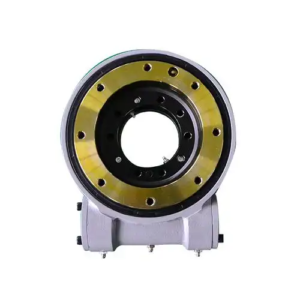
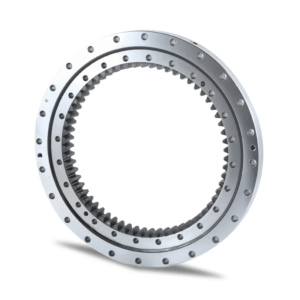
Slewing Bearings
Table of Contents
Definition of Slewing Bearings
Slewing bearings is a special type of bearing designed to support the rotation of heavy machinery or structures. It allows for smooth and controlled movement in both horizontal and vertical directions. These bearings are commonly used in equipment like cranes and excavators to handle large loads while maintaining stability.

FHD Bearings is an ISO 9001:2015 certified manufacturing enterprise that stocks a full range of Slewing Bearings. With over 1,200 different bearing sizes and over 250K bearings in stock.
Materials of Slewing Bearings
Alloy Steel
Alloy steels are often used for their enhanced mechanical properties, such as increased strength and hardness. Chromium, molybdenum, and other alloying elements are added to improve performance.
Carbon Steel
Carbon steel is a versatile and widely used material for slewing ring bearings. It provides good strength and durability at a relatively lower cost compared to some alloy steels.
Stainless Steel
In applications where corrosion resistance is crucial, especially in harsh environments or outdoor settings, slewing ring bearings may be made from stainless steel. This material is resistant to rust and corrosion.

Tool Steel
Tool steels, known for their hardness and resistance to abrasion, may be used in slewing ring bearings where high wear resistance is required, such as in demanding industrial applications.
Corrosion-Resistant Alloys
Besides stainless steel, other corrosion-resistant alloys may be utilized for the main bodies of slewing ring bearings in environments where standard steel might be prone to corrosion. These alloys can include materials like nickel-based alloys or specific corrosion-resistant steel alloys.
Features of Slewing Bearings

- Load-Carrying Capacity: Slewing bearings are designed to support significant axial, radial, and moment loads. They are capable of handling heavy loads while providing stability and smooth rotation.
- Rotation Capability: Slewing bearings allow for 360-degree rotation or angular movement, making them suitable for applications that require continuous rotation or pivoting.
- Compact Design: Slewing bearings are often designed to be compact, allowing for efficient use of space within machinery or structures. This compactness contributes to their versatility in various applications.
- High Precision and Rigidity: Slewing bearings are engineered for high precision in terms of rotational movement. They offer rigidity and accuracy, making them suitable for applications where precise positioning is crucial.
- Sealing and Lubrication: To ensure proper functioning and longevity, slewing bearings are equipped with sealing mechanisms to protect against contaminants and lubrication systems to reduce friction and wear.
- Versatility in Applications: Slewing bearings find use in a wide range of applications, including construction machinery (e.g., cranes, excavators), wind turbines, industrial equipment, and other rotating structures. Their versatility makes them integral components in various industries.
Advantages of Slewing Bearings
- 360-Degree Rotation: Slewing bearings allow things to spin all the way around, useful in machinery like cranes.
- Handles Various Loads: They support different types of loads (pushing, pulling, twisting) simultaneously, making them versatile for heavy-duty applications.
- Built-In Gears and Drives: Some have gears or drives included, simplifying the design and assembly of rotating equipment.
- Simplifies Assembly: They make it easier to put together large rotating structures.
- Space-Efficient Design: Slewing bearings are compact, saving space in machinery and structures.
- Precision Movement: They move precisely, ensuring accurate rotation, crucial for positioning in machinery.

Taxonomy of Slewing Bearings
Ball Slewing Bearing

Four Point Contact Ball Slewing Bearing
Four Point Contact Ball Slewing Bearing is a specialized type of bearing with four points of contact, designed for axial, radial, and moment loads in rotating machinery.

Four Point Contact Ball Slewing Bearing With Flanged
This is a specialized bearing with four points of contact, providing stability and precise rotation in machinery, featuring a flanged design for added support.

Eight Point Contact Ball Slewing Bearing
Eight Point Contact Ball Slewing Bearings feature eight contact points, offering high load capacity and stability. Ideal for applications requiring precision and durability in rotational movements.
Roller Slewing Bearing

Cross Roller Slewing Bearing
Cross Roller Slewing Bearing is a specialized type of slewing bearing with cylindrical rollers arranged crosswise, providing high load capacity and compact design for precise rotational applications.

Three-Row Cross Roller Slewing Bearing
They are advanced rotational components with three rows of rollers arranged at right angles, providing high load capacity and compact design in heavy machinery.
Wire Race Bearing

Slewing Bearing with Wire Race Bearing
Slewing bearing with wire race design optimizes rotational efficiency, reducing friction and enhancing load distribution in machinery, ensuring smooth and precise movement.

Wire Race Bearings Elements
Wire Race Bearings Elements are an important part of the slewing ring with wire race bearings.
Applications of Slewing Bearings

- Construction Equipment: Used in cranes, excavators, and concrete pumps for smooth rotation and support during heavy lifting.
- Wind Turbines: Facilitate the rotation of turbine blades, allowing them to capture wind energy efficiently.
- Robotics and Automation: Integral in robotic arms and automation systems, enabling precise rotational movements in manufacturing.
- Material Handling: Employed in conveyor systems, stacker-reclaimers, and loaders/unloaders for smooth material transfer.
- Solar Tracking Systems: Used to adjust the orientation of solar panels, optimizing exposure to sunlight for increased energy production.
- Aerial Platforms and Manlifts: Enable rotation in aerial work platforms, aiding precise positioning for tasks such as construction and maintenance.
Key Manufacturing Process of Slewing Bearing
Material Selection
Choose high-quality steel with specific mechanical properties to ensure strength and durability.
Forging
Shape the selected steel through forging to enhance its internal grain structure, improving strength and toughness.
Heat Treatment
Subject the forged components to heat treatment processes like quenching and tempering to achieve desired hardness and mechanical properties.
Machining
Utilize CNC machining for precision shaping of raceways and gear teeth, ensuring tight tolerances and a smooth surface finish.
Gear Teeth Cutting
Employ gear-cutting processes to create precise teeth profiles, especially if the slewing bearing includes gears.


FAQ - Frequently Asked Questions

Slewing Bearing FAQ
Q: What is a slewing bearing?
A: A slewing bearing is a large-diameter rotational bearing designed to handle axial, radial, and moment loads simultaneously, commonly used in heavy-duty machinery.
Q: What are the main applications of slewing bearings?
A: Slewing bearings are widely used in cranes, excavators, wind turbines, construction equipment, and industrial turntables.
Q: What types of slewing bearings are available?
A: Common types include single-row ball, double-row ball, cross roller, and three-row roller slewing bearings, each designed for specific load conditions.
Q: What materials are used in slewing bearings?
A: Slewing bearings are typically made from high-strength alloy steel, with hardened raceways and precision rolling elements for durability and performance.
Q: How do you select the right slewing bearing?
A: Selection depends on load capacity, rotational speed, mounting configuration, environmental conditions, and required service life.
Q: What is the typical lifespan of a slewing bearing?
A: The lifespan varies depending on load, lubrication, and operating conditions, but proper maintenance can significantly extend service life.
Q: Do slewing bearings require regular maintenance?
A: Yes, regular lubrication, bolt inspection, and seal checks are essential to ensure optimal performance and prevent premature failure.
Q: Can slewing bearings handle combined loads?
A: Yes, slewing bearings are specifically designed to support combined axial, radial, and tilting moment loads in a single compact unit.
Q: What lubrication is recommended for slewing bearings?
A: High-quality grease is typically used, with lubrication intervals depending on operating conditions and load requirements.
Q: What are the advantages of slewing bearings?
A: Slewing bearings offer compact design, high load capacity, easy installation, and the ability to integrate rotational movement in heavy equipment.
Installation and Maintenance
Installation
- Inspect the Slewing Bearing: Before installation, carefully inspect the slewing bearing for any damage, contamination, or irregularities. Check for proper lubrication and make sure it meets the specifications required for your application.
- Prepare the Mounting Surface: Ensure that the mounting surface is clean, flat, and free from any debris or contaminants. Any irregularities in the mounting surface can affect the performance of the slewing bearing, so take the time to address any issues before installation.
- Lubrication: Proper lubrication is crucial for the smooth operation and longevity of the slewing bearing. Apply the recommended lubricant according to the manufacturer’s guidelines. Ensure that the lubrication is evenly distributed and that the slewing bearing is adequately filled.
- Position the Slewing Bearing: Carefully position the slewing bearing onto the mounting surface. Use lifting equipment, if necessary, to handle the weight of the slewing bearing. Align the mounting holes with the corresponding holes in the mounting surface.
- Bolt Installation: Insert and tighten the bolts gradually and uniformly in a cross pattern. This ensures even pressure distribution and helps prevent misalignment. Follow the recommended torque values provided by the manufacturer to achieve the proper bolt preload.
- Check Alignment: After securing the slewing bearing in place, check for proper alignment. Ensure that the slewing bearing is concentric with the axis of rotation and that there is no misalignment. Adjust the position if necessary, and re-tighten the bolts.
- Final Inspection and Testing: Conduct a final inspection to verify that the slewing bearing is securely installed, and all components are in place. Rotate the bearing manually to check for any binding or irregular resistance. Perform any required tests specified by the manufacturer to ensure the proper functioning of the slewing bearing.
Maintenance:
- Regular Lubrication: Keep the slewing bearing properly lubricated according to the manufacturer’s recommendations. Use the specified lubricant and ensure it is applied at regular intervals. Regular lubrication helps reduce friction, prevents wear, and extends the life of the bearing.
- Inspection of Seals and Guards: Regularly inspect the seals and guards of the slewing bearing to ensure they are intact and functioning correctly. Seals prevent contaminants from entering the bearing, and guards provide additional protection. Replace damaged or worn seals and guards promptly.
- Monitoring for Abnormal Noise and Vibration: Periodically monitor the slewing bearing for any abnormal noise or vibration during operation. Unusual sounds or vibrations can be indicative of issues such as misalignment, loose bolts, or bearing damage. Address any abnormalities promptly to prevent further damage.
- Bolt Tightening and Inspection: Check the tightness of bolts regularly to ensure they remain securely fastened. Use the recommended torque values provided by the manufacturer. If any bolts are found to be loose, tighten them according to the specified sequence and torque levels. Inspect for any signs of wear or damage on the bolts.
- Visual Inspection for Wear and Damage: Conduct visual inspections of the slewing bearing components for signs of wear, corrosion, or damage. Pay attention to the raceways, rolling elements, and gear teeth (if applicable). If any abnormalities are detected, take corrective action, which may involve repairs or replacements as needed.
- Periodic Re-Greasing: Depending on the application and operating conditions, consider periodic re-greasing of the slewing bearing. This helps replenish the lubricant and ensures proper lubrication levels. Follow the manufacturer’s guidelines regarding the type and amount of grease to use.