Table of Contents

Rambo
What Is M50 Steel? Complete Guide to Aerospace Bearing Steel
M50 steel is one of the most important high-performance materials used in aerospace and ultra-high-speed bearing applications. Known for its exceptional high-temperature hardness, rolling contact fatigue resistance, and dimensional stability, M50 steel has become a preferred material for aircraft engine bearings, precision spindle systems, and advanced turbine applications.
Compared with conventional bearing steels such as 52100 chrome steel, M50 steel offers significantly better thermal resistance and high-speed reliability under extreme operating conditions.
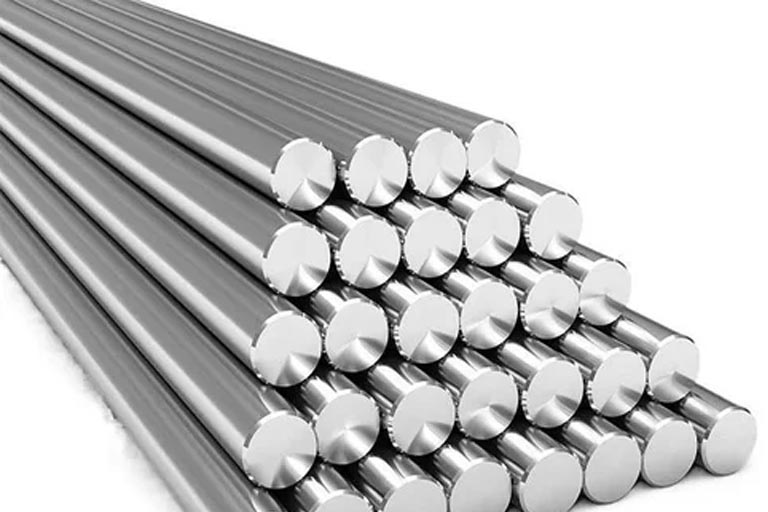
M50 steel is a molybdenum-based high-speed tool steel specifically engineered for aerospace-grade rolling bearings operating under high speed, heavy load, and elevated temperature environments.
What Is M50 Steel?
M50 steel is classified as a high-speed tool steel developed primarily for aerospace bearing applications. The material combines high hardness, wear resistance, and thermal stability, making it ideal for critical rotating systems.
M50 steel is commonly used in:
- Aircraft engine bearings
- Gas turbine bearings
- High-speed spindle bearings
- Military aerospace systems
- Precision machine tool spindles
According to the ASTM International, advanced bearing steels used in aerospace applications must maintain stable mechanical properties under severe operating conditions.
Chemical Composition of M50 Steel
The alloy composition of M50 steel is carefully optimized to achieve a balance between hardness, wear resistance, and thermal performance.
| Element | Typical Content (%) |
|---|---|
| Carbon (C) | 0.80 – 0.85 |
| Chromium (Cr) | 3.75 – 4.25 |
| Molybdenum (Mo) | 4.00 – 4.50 |
| Vanadium (V) | 0.90 – 1.15 |
| Tungsten (W) | 0.00 – 0.50 |
Main Characteristics of M50 Steel
1. Excellent High-Temperature Hardness
One of the biggest advantages of M50 steel is its ability to maintain hardness at elevated temperatures. Standard bearing steels typically lose hardness rapidly under heat, while M50 can operate reliably at temperatures between 315°C and 427°C.
This property makes M50 especially suitable for:
- Jet engine mainshaft bearings
- Gas turbine support bearings
- Ultra-high-speed spindle systems
2. Outstanding Rolling Contact Fatigue Resistance
Rolling contact fatigue is one of the leading causes of bearing failure. M50 steel was specifically developed to improve fatigue life under extremely high rotational speeds and heavy stress concentrations.
The material performs exceptionally well in:
- High DN value bearings
- Continuous high-speed operation
- Aerospace rotating assemblies
3. Superior Wear Resistance
Due to its fine carbide microstructure and high molybdenum content, M50 steel provides excellent resistance against:
- Abrasive wear
- Surface fatigue
- Micro-pitting
- Raceway damage
More information about aerospace bearing technologies can be found through the NASA Technical Reports Server.
4. Excellent Hot Hardness Retention
After proper heat treatment, M50 steel commonly achieves:
- 60–65 HRC hardness
Unlike conventional steels, M50 retains its hardness even under continuous high-temperature operation.
Typical Applications of M50 Steel
| Industry | Application |
|---|---|
| Aerospace | Jet engine bearings |
| Aviation | Main shaft bearings |
| Machine Tools | High-speed spindle bearings |
| Defense | Turbine support bearings |
| Precision Equipment | Ultra-high-speed angular contact bearings |
M50 Steel vs 52100 Bearing Steel
Many industrial buyers compare M50 steel with standard 52100 chrome bearing steel. While 52100 remains the most common bearing material globally, M50 offers substantially higher performance under demanding conditions.
| Property | M50 Steel | 52100 Steel |
|---|---|---|
| Temperature Resistance | Excellent | Moderate |
| Wear Resistance | Excellent | Good |
| High-Speed Capability | Excellent | Moderate |
| Cost | Very High | Lower |
| Aerospace Usage | Common | Limited |
| Machinability | Difficult | Easier |
For additional bearing material references, engineers often consult technical resources from the ASM International.
What Is M50NiL Steel?
M50NiL is a modified aerospace bearing steel derived from M50 technology. Unlike traditional through-hardening M50 steel, M50NiL uses a carburized structure with a tougher core.
Main benefits include:
- Improved fracture toughness
- Higher shock resistance
- Better impact performance
- Enhanced gearbox reliability
M50NiL is widely used in:
- Helicopter transmissions
- Aerospace gearboxes
- Advanced military aviation systems
Advantages of M50 Steel Bearings
- Excellent fatigue life
- High thermal stability
- Superior dimensional accuracy
- Outstanding high-speed capability
- Reliable aerospace-grade performance
Limitations of M50 Steel
High Manufacturing Cost
M50 steel is significantly more expensive than standard bearing steels because it typically requires:
- Vacuum melting
- Advanced heat treatment
- Precision grinding
- Strict metallurgical control
Difficult Machining
Due to its hardness and carbide structure, machining M50 steel requires advanced manufacturing capability and specialized tooling.
Limited Corrosion Resistance
M50 steel is not a stainless steel material. Proper lubrication and anti-corrosion protection are necessary during operation and storage.
International Standards and Equivalents
| Standard | Designation |
|---|---|
| AISI | M50 |
| UNS | T11350 |
| AMS | AMS 6491 |
| DIN Equivalent | Similar to 1.3554 variants |
Conclusion
M50 steel remains one of the most important aerospace bearing materials in the world. Its exceptional combination of high-temperature hardness, rolling fatigue resistance, and wear performance makes it indispensable for critical high-speed applications.
Although the manufacturing cost is substantially higher than conventional bearing steels, M50 steel delivers unmatched reliability in:
- Aircraft engines
- Gas turbines
- High-speed precision spindles
- Aerospace transmission systems
As aerospace and precision engineering industries continue pushing toward higher rotational speeds and more demanding operating conditions, M50 steel will remain a core material for next-generation bearing technology.
Source References: