
Table of Contents
1. Introduction to Duplex Bearing Configurations
1.1 Definition of Duplex Bearings
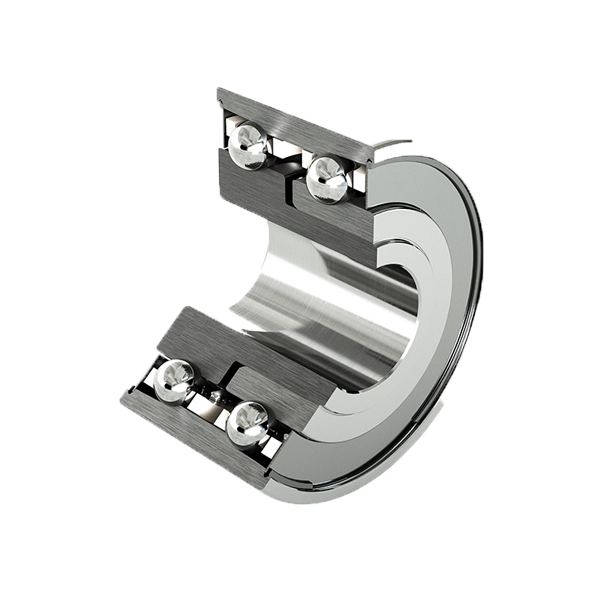
Duplex bearings refer to a matched set of two precision bearings arranged together to achieve greater rigidity, load capacity, and axial control than a single bearing could reasonably deliver. In engineering circles, these pairs are carefully ground and assembled so that when mounted correctly, they behave as a coordinated mechanical unit rather than two independent components. Think of it like a well-synchronized pickleball doubles team—each partner complements the other’s strengths, resulting in stability, balance, and dependable performance under pressure. The bearings are typically manufactured with controlled face offsets so that the intended preload is established once they are clamped into position. This intentional pairing ensures that axial forces are properly distributed and structural compliance is minimized.
1.2 Why High-Stiffness Systems Require Specialized Bearing Arrangements
High-stiffness systems—such as CNC spindles, high-speed routers, and precision robotic joints—operate under conditions where even microscopic deflection can translate into measurable performance losses. When mechanical assemblies encounter high loads, dynamic vibrations, or rapid directional changes, conventional single bearings may exhibit elastic deformation that undermines positional accuracy. Duplex configurations mitigate these issues by increasing the structural resistance to displacement, allowing the system to maintain alignment even when the mechanical workload ramps up. From an engineering standpoint, it is a bit like tightening the strings on a performance racket—everything becomes sharper, more controlled, and far less prone to wobble. As machines demand greater productivity and precision, duplex arrangements become indispensable.
1.3 Overview of Common Duplex Configurations
The three primary types of duplex bearing systems are back-to-back (DB), face-to-face (DF), and tandem (DT). Each type handles axial forces and structural stiffness in its own way, offering designers flexibility when creating rotating machinery. Back-to-back bearings are very rigid and resist tilting effectively. Face-to-face bearings can accommodate slight misalignments more easily. Tandem bearings are designed to carry axial loads in a single direction, making them suitable for heavy thrust applications.
2. Understanding System Stiffness in Mechanical Design
2.1 Definition of Stiffness in Bearing Applications
In mechanical engineering, stiffness refers to a system’s ability to resist deformation when a force is applied. In bearing assemblies, factors like bearing geometry, contact angle, and configuration determine stiffness. A shaft supported by a high-stiffness bearing assembly experiences minimal deflection under load, helping rotating parts maintain their geometric precision. Engineers typically evaluate stiffness using load-deflection diagrams, which show how a bearing responds under different operating conditions. The greater the stiffness, the more effectively a bearing preserves alignment and accuracy.
2.2 Relationship Between Stiffness, Precision, and Load Capacity
The relationship between stiffness, precision, and load capacity is crucial. Stiffness reduces deflection, precision ensures accurate movement, and a higher load capacity allows the system to handle forces without compromising structure. When these three elements are balanced, the machine achieves both accuracy and durability—much like a finely tuned tool hitting micron-level tolerances without losing alignment.
2.3 Impact of Bearing Arrangement on Machine Performance
The positioning of bearings greatly impacts how loads are managed and absorbed. Using a duplex bearing setup effectively reduces vibrations, controls axial movement, and maintains shaft stability. This is especially beneficial for machinery, resulting in longer service life and improved product quality. An improper bearing arrangement can cause heat buildup, premature wear, or structural issues, so engineers focus carefully on bearing layouts during the early design stages.
3. What Are Duplex Bearings?
3.1 Structural Characteristics of Duplex Bearing Sets
A duplex bearing set is manufactured so that the geometry of both bearings aligns perfectly, allowing the contact angles and raceway surfaces to work smoothly together. The bearing rings are precisely ground to strict tolerances, enabling the set to achieve a specific preload once assembled. This ensures the load is evenly distributed, preventing stress points that could cause failure. Often, the bearings include orientation marks to facilitate proper installation, allowing the pair to function as a single, cohesive unit.
3.2 Differences Between Single Bearings and Duplex Sets
Here’s a humanized version of your text:
For instance, a single bearing handles radial loads well and can support some axial loads depending on its design. However, in precision machinery that demands high rigidity and control of axial forces in both directions, a single bearing often falls short of the required standards. Duplex bearings, with their paired setup, create a wider support structure. This configuration helps resist tilting forces and keeps the shaft properly aligned. In short, duplex bearings provide a level of stability that a single bearing alone cannot achieve.
3.3 Typical Materials and Manufacturing Standards
Generally, duplex bearings are made from high-carbon chromium steels like AISI 52100, offering excellent hardness, fatigue strength, and dimensional stability. For applications needing corrosion resistance or high-temperature performance, stainless steel or hybrid ceramic materials may be used. Manufacturing typically follows international standards such as ISO or ABEC precision classes, ensuring accurate dimensions, roundness, and smooth surface finishes. Combining high-quality materials with precise manufacturing processes ensures bearings perform reliably even under demanding conditions.
4. Key Benefits of Duplex Bearing Arrangements
4.1 Increased Axial and Radial Load Capacity
“With a duplex bearing arrangement, the operational load is shared over two bearings instead of concentrating the load on a single bearing. This improves the capacity to handle both axial and radial loads. When axial forces increase, the two bearings share the burden, reducing fatigue. In heavy-duty machinery, this enhanced load capacity can be the difference between smooth operation and frequent maintenance interruptions. Overall, the system becomes stronger, more reliable, and well-suited for continuous operation.”
4.2 Improved System Rigidity and Accuracy
One of the main benefits of duplex bearing arrangements is their rigidity. By providing a wider support base for the shaft, these paired bearings enhance positional stability and reduce shaft deflection. This increased stiffness boosts precision, making duplex setups a preferred choice in engineering applications where the highest level of accuracy is essential.
4.3 Enhanced Stability in High-Speed Operations
High-speed rotating systems generate dynamic forces that can destabilize loosely supported shafts. Duplex bearings counteract these forces by providing a rigid support structure capable of maintaining alignment at elevated speeds. Properly preloaded pairs also reduce vibration and suppress resonance that might otherwise develop during rapid rotation. The result is a more stable and reliable mechanical system that performs consistently even under demanding operational conditions. Stability at speed is essential for modern manufacturing equipment.
5. Overview of Common Duplex Configurations
5.1 Back-to-Back Configuration (DB)
The back-to-back arrangement ensures the bearings’ contact areas are properly aligned, providing broad support. This design effectively resists tilting forces and axial movement. As a result, DB configurations are ideal when maximum structural rigidity is required. The setup functions like a bracket securing the shaft on both sides and is considered the strongest among duplex arrangements.
5.2 Face-to-Face Configuration (DF)
In the face-to-face setup, the bearings’ contact angles are aligned toward the shaft’s centerline. This configuration creates a more compact support system while allowing for slight misalignments between the shaft and housing. The DF arrangement offers a bit less stiffness but greater flexibility in alignment. When assembly tolerances aren’t perfectly precise, this setup provides reliable operation, striking a balance between rigidity and adaptability.
5.3 Tandem Configuration (DT)
The tandem setup positions both bearings in the same direction, allowing them to carry loads moving in just one direction. Unlike back-to-back or face-to-face arrangements, tandem bearings can’t handle loads from both directions without adding another bearing. However, for unidirectional forces, this configuration efficiently distributes the load between the two bearings. It also increases thrust capacity without major changes to the shaft design.
6. Back-to-Back Bearing Configuration (DB)
6.1 Structural Layout and Load Direction
The DB configuration is such that the broad ends of the contact angles are oriented to face away from each other. This configuration ensures a wide triangular path that supports the shaft against bending moments. Axial loads acting in either direction are effectively countered by the opposing bearings. This design ensures exceptional structural stiffness and minimizes the possibility of shaft tilt. This is a highly effective design for use in mechanical assemblies that require precision.
6.2 Advantages in High-Rigidity Applications
Back-to-back arrangements have been accepted as the ultimate in the design of rigidity, where the support spacing promotes resistance against moment loads and hence the structural integrity of the rotating assembly. This rigidity ensures that the machine can hold its precise location despite the presence of heavy loads. The DB configuration has been found suitable for the most demanding environments that engineers need in their industries because the design is both durable and highly efficient.
6.3 Typical Use Cases in Industrial Machinery
The DB bearing arrangements are often used in machine tool spindles, precision grinding machines, and high-speed milling machines. Such machines require high stability to maintain precise dimensional accuracy. The DB bearing arrangement is used to maintain the rigidity of the spindle even under varying cutting forces. This improves the precision of the machine, as well as the life of the cutting tools used. The DB bearing arrangement is often used by equipment designers to attain the best results.
7. Face-to-Face Bearing Configuration (DF)
7.1 Structural Arrangement and Axial Load Handling
In the face-to-face arrangement, the contact angles of the bearing tend to converge inwardly to the centerline of the shaft. In this arrangement, the stance is narrower compared to the DB arrangement. In spite of the narrower stance, the face-to-face arrangement is capable of carrying axial loads in both directions. The inward orientation enables the bearings to adjust to minor misalignments between the shaft and the housing. In some applications, it may be difficult to achieve proper shaft-housing alignment.
7.2 Benefits for Misalignment Compensation
One of the defining advantages of the DF configuration is its ability to tolerate small angular misalignments. Because the bearings face inward, the system can adapt slightly to structural shifts without imposing excessive stress on the raceways. This flexibility helps prevent premature wear and extends operational lifespan. Engineers often select DF arrangements when assembly conditions are less predictable. The configuration offers a measure of mechanical forgiveness.
7.3 Applications Requiring Moderate Stiffness
Face-to-face bearing arrangements are frequently used in applications where moderate stiffness is sufficient but alignment flexibility is desirable. Examples include certain gearbox assemblies, conveyor drives, and general industrial equipment. While the rigidity is somewhat lower than DB configurations, the DF layout still provides dependable load support. Its tolerance for misalignment can simplify installation procedures. This makes it a practical choice in many machinery designs.
8. Installation Best Practices
8.1 Structural Design and Load Sharing Principle
The tandem arrangement ensures that both bearings are properly aligned such that the angle of contact is in the same direction. This enables the bearings to share the loads that act along a single axis. As a result of sharing the loads between the two bearings, the system is able to withstand twice the amount of thrust compared to a single bearing. This is because the total amount of the axial load is doubled.
8.2 Handling High Axial Loads in One Direction
When designing a system to handle high levels of thrust loads acting in a single direction, the use of tandem bearings is quite effective. The system is able to withstand the high levels of axial loads since both bearings share the loads and no single bearing is subjected to excessive loads. This ensures that the system is quite durable and reliable in its operations.
8.3 Integration with Additional Bearings for Bidirectional Loads
When designing a mechanical system to withstand loads acting from both directions, the use of tandem bearings is quite effective when integrated with other types of bearings. For instance, a pair of tandem bearings can be integrated with a single bearing of the angular contact type. This is a quite effective system since it is able to withstand loads acting from both directions while maintaining a balance between strength and stability.
9. Comparison of Duplex Bearing Configurations
9.1 Load Capacity Differences
Each duplex configuration handles loads differently, resulting in distinct load capacities. Back-to-back arrangements excel at managing both radial and axial loads due to their high rigidity. Face-to-face setups provide good axial support while allowing for slight misalignment. Tandem configurations, however, are optimized mainly for axial loads in one direction. Understanding these differences helps engineers select the most suitable configuration for a given application.
9.2 Stiffness and Stability Characteristics
The stiffness of each configuration varies. Back-to-back setups offer the highest rigidity thanks to their wide support base. Face-to-face arrangements have slightly lower stiffness but tolerate misalignment better. Tandem configurations focus more on load distribution than structural rigidity. Choosing the right configuration involves balancing stiffness, flexibility, and operational requirements.
9.3 Selection Criteria for Different Applications
Selecting the proper configuration requires evaluating system needs carefully. Engineers should consider load direction, rotational speed, structural rigidity, and assembly tolerances. Machine tools often favor back-to-back setups for their superior stiffness. Applications prone to misalignment benefit from face-to-face arrangements. Tandem configurations are typically used in high-thrust scenarios to efficiently manage axial forces.
10. Preload in Duplex Bearing Systems
10.1 Definition and Importance of Preload
Preload is the axial force deliberately applied to bearings during assembly. This force removes internal clearance, ensuring the rolling elements maintain constant contact with the raceways. Proper preload enhances system stiffness and reduces vibration, while excessive preload can generate heat and accelerate wear. Achieving the right balance is key to optimal bearing performance.
10.2 Types of Preload: Light, Medium, and Heavy
Different applications require different levels of preload. Light preload is typically used in high-speed systems to minimize friction and heat. Medium preload strikes a balance between stiffness and durability. Heavy preload is reserved for applications needing maximum rigidity and load capacity. Engineers choose the preload level based on the specific operating conditions.
10.3 Influence of Preload on Stiffness and Bearing Life
Preload directly impacts both system stiffness and bearing life. Increasing preload eliminates internal clearance, boosting rigidity, but too much preload raises contact stress and can shorten bearing lifespan. Properly balancing preload ensures reliable operation and extended service life.
11. Installation and Mounting Considerations
11.1 Importance of Correct Orientation of Duplex Bearings
Ensuring the proper orientation when installing duplex bearing pairs is essential. Most duplex bearing pairs come with markings to guide correct alignment. Incorrect orientation can disrupt bearing performance, so careful installation is crucial to achieve optimal function. In some cases, precise assembly techniques are needed.
11.2 Importance of Shaft and Housing Tolerance Requirements
Proper shaft and housing tolerances are critical for reliable bearing operation. Excessive clearance can lead to vibrations, while too tight a fit can create undue stress. Engineers generally follow the tolerance classes recommended by bearing manufacturers. Adhering to these standards ensures correct load distribution and protects the integrity of the bearing assembly.
11.3 How to Prevent Errors during Installation
Installation errors can significantly impact bearing performance. Improper handling, contamination, or using the wrong tools can stress precision components. Special tools and a clean work environment help maintain alignment and prevent mechanical stress. Paying close attention during installation ensures long-term reliability and performance.
12. Lubrication Strategies for Duplex Bearings
12.1 Grease Lubrication for Standard Applications
Grease lubrication is widely used in standard industrial applications due to its simplicity and reliability. Grease forms a protective film that reduces friction between rolling elements and raceways. It also acts as a barrier against contaminants such as dust and moisture. In many systems, grease lubrication provides adequate performance with minimal maintenance requirements. Proper grease selection ensures optimal bearing protection.
12.2 Oil Lubrication for High-Speed Systems
High-speed machinery often requires oil lubrication to dissipate heat more effectively than grease. Oil circulates through the bearing assembly, removing excess thermal energy and maintaining stable operating temperatures. This method is common in high-precision spindles and turbine equipment. Continuous oil flow also helps flush away microscopic wear particles. These characteristics make oil lubrication ideal for demanding applications.
12.3 Lubrication Maintenance and Monitoring
Regular lubrication maintenance is essential for preserving bearing performance. Engineers monitor lubricant condition, temperature, and contamination levels to ensure proper operation. Scheduled relubrication intervals help maintain protective film thickness. Advanced monitoring systems may even analyze lubricant chemistry to detect early signs of wear. Proactive maintenance strategies extend bearing lifespan significantly.
13. Common Applications of Duplex Bearings
13.1 Machine Tool Spindles
Machine tool spindles need exceptional stiffness and precise rotation. Duplex bearings provide the support required to keep cutting paths accurate. Their ability to resist deflection ensures consistent machining. Most CNC spindles use duplex bearings to achieve micron-level precision, which is critical in modern manufacturing.
13.2 Precision Industrial Equipment
Precision instruments and semiconductor manufacturing machines rely heavily on duplex bearings. These applications demand highly stable rotation, as even minor deviations can affect product quality or measurement accuracy. Duplex bearings provide the rigidity needed to maintain consistent performance.
13.3 Robotics and Automation Systems
Robotic arms and automated systems require smooth, stable rotational motion. Duplex bearings give the stiffness necessary for precise motion control. Accurate positioning is vital in robotics for repeatable performance and safety. By minimizing vibration and deflection, duplex bearings improve robotic operations, and their use continues to grow with advancing automation technology.
14. Common Design Mistakes and How to Avoid Them
14.1 Incorrect Bearing Configuration Selection
Choosing the wrong bearing setup can undermine an entire system. Engineers must consider load direction, speed, and required stiffness. Selecting an inappropriate configuration can cause premature wear or instability. Careful analysis prevents costly mistakes and ensures optimal performance.
14.2 Improper Preload Adjustment
Incorrect preload is a frequent design error. Too much preload increases friction and heat; too little reduces stiffness. Engineers should calculate the correct preload during design, and precision grinding of bearing surfaces helps maintain consistency. Proper adjustment ensures long-term reliability.
14.3 Installation and Alignment Issues
Faulty installation and misalignment can shorten bearing life. Misaligned shafts lead to uneven loads and faster wear. Accurate assembly techniques and regular inspections help maintain alignment, ensuring the best bearing performance.
15. Selecting the Right Duplex Bearing Supplier
15.1 Evaluating Manufacturing Capabilities
A reliable supplier is key to obtaining high-quality duplex bearings. Manufacturers should have advanced production capabilities, precise equipment, and strong process controls. Well-equipped facilities and experienced engineers ensure consistent quality.
15.2 Quality Control and Certification Standards
Quality assurance programs confirm that bearings meet international standards. Certifications like ISO demonstrate commitment to excellence. Thorough inspections verify dimensions and material integrity. Trusted suppliers invest in quality control to ensure dependable performance.
15.3 OEM Customization and Technical Support Availability
Many applications require custom bearings. A good supplier provides OEM support, engineering consultation, and tailored solutions for preload, materials, and configurations. Technical assistance ensures seamless integration, and strong partnerships support long-term success.
Reference
1. Duplex Angular Contact Bearings: When Two Is Better Than One
2. Understanding Back-to-Back & Face-to-Face Bearing Arrangements
3. Precision Ball & Roller Bearings (Medium to Large Diameter)
Get a Quick Quote
Share the Post: