Table of Contents

Chips
1. Introduction to Crossed Roller Slew Bearings
Definition and basic concept
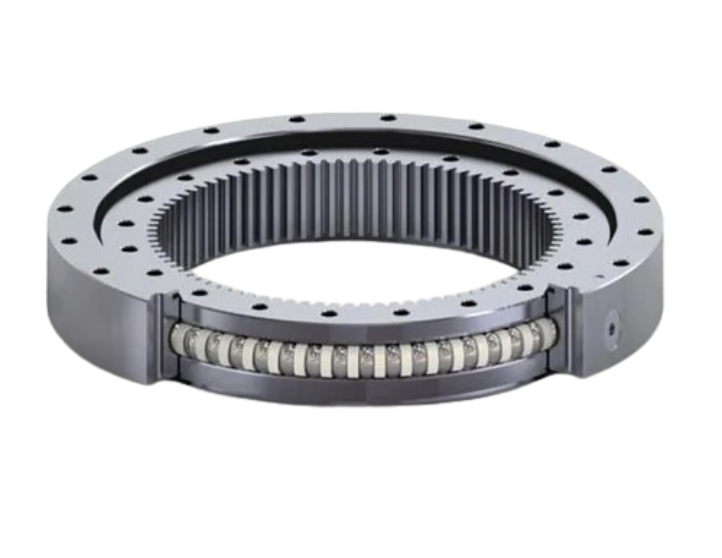
A crossed roller slew bearing is a rotational bearing where cylindrical rollers are arranged at right angles to each other between inner and outer raceways. This geometry allows the bearing to handle axial, radial, and moment loads simultaneously without breaking a sweat. From an engineer’s standpoint, it’s a clean, elegant solution that punches well above its weight.
Role in modern mechanical systems
These bearings show up anywhere precision motion and compact packaging are non-negotiable. You’ll find them quietly doing the hard work inside robots, rotary tables, and positioning stages. In today’s machines, where accuracy is king and space is tight, they’ve become a go-to component.
Why fewer parts matter for accuracy
Every extra component introduces tolerance stack-up, and that’s where accuracy goes to die. By consolidating functions into a single bearing assembly, crossed roller slew bearings cut out a lot of mechanical noise. Fewer parts mean fewer variables, and fewer variables mean better control—plain and simple.
2. Evolution of Slew Bearing Technology
Traditional slew bearing designs
Early slew bearings relied on balls or rollers arranged in relatively simple raceways. These designs got the job done, but they often required multiple rows or supplemental components to manage complex loads. As machines evolved, those old-school solutions started showing their age.
Limitations of multi-component systems
Multi-piece bearing systems tend to suffer from uneven load sharing and alignment headaches. Each interface is another opportunity for deflection, wear, or plain old slop. Over time, those little issues snowball into reduced accuracy and higher maintenance demands.
Emergence of crossed roller configurations
Crossed roller designs came onto the scene as engineers looked for tighter, stiffer solutions. By alternating roller orientation, a single bearing could suddenly handle loads in every direction. It was one of those “why didn’t we do this sooner” moments in bearing design.
3. Core Design Principles
Orthogonal roller arrangement
The hallmark of a crossed roller slew bearing is the 90-degree roller orientation. Each roller carries load along its axis, distributing forces efficiently across the raceways. This setup dramatically boosts stiffness without adding bulk.
Integrated inner and outer rings
Unlike assemblies that rely on separate housings or retainers, these bearings integrate the raceways directly into the rings. This integration reduces deformation under load and keeps everything square. The result is a bearing that behaves more like a structural component than a simple rolling element.
Load distribution mechanics
Loads are shared across a larger contact area compared to ball bearings. That means lower contact stress and more predictable behavior under heavy or dynamic loading. From a design perspective, it’s a win-win situation.
4. How Fewer Parts Improve Accuracy
Reduced assembly tolerances
When you trim down the part count, you also trim down tolerance accumulation. Each machined surface has less opportunity to wander out of spec. That’s how you keep rotational accuracy tight without resorting to heroics.
Minimized cumulative errors
Stacked components tend to amplify small errors into big problems. A crossed roller slew bearing sidesteps that issue by consolidating functions into one precision-ground unit. The math stays clean, and the motion stays true.
Enhanced positional repeatability
Repeatability is where these bearings really shine. With less internal compliance, the bearing returns to the same position cycle after cycle. That kind of consistency is gold in precision equipment.
5. Structural Advantages of Crossed Rollers
Increased rigidity and stiffness
Rigidity is baked into the design thanks to line contact between rollers and raceways. This stiffness keeps deflection in check even under heavy loads. In practical terms, the machine feels solid and predictable.
Improved resistance to deformation
Because loads are spread evenly, localized stress concentrations are minimized. The bearing resists brinelling and long-term distortion better than many conventional designs. That durability translates directly into sustained accuracy.
Stability under complex loads
Real-world loads are rarely simple, and these bearings are built for that reality. Combined axial, radial, and moment loads are handled without drama. The bearing just takes it in stride and keeps spinning.
6. Load Handling Capabilities
Axial load performance
Axial loads are carried efficiently along the roller axes. This allows for high thrust capacity without oversized components. It’s a tidy solution that keeps machines compact.
Radial load performance
Radial forces are supported just as effectively, thanks to the alternating roller orientation. There’s no need for additional bearings to pick up the slack. Everything is handled within one assembly.
Moment load optimization
Moment loads are where crossed roller slew bearings really earn their keep. The wide effective contact span resists tilting and overturning forces. That stability is critical in precision rotary systems.
7. Precision Performance Characteristics
Rotational accuracy
Tight raceway geometry and controlled preload deliver excellent rotational accuracy. Runout stays low even as loads fluctuate. For precision motion, that’s exactly what the doctor ordered.
Smooth motion control
The rolling action is consistent and predictable. There’s no chatter, no stick-slip, just smooth rotation. Operators notice it immediately when tuning a system.
Low runout and vibration
Reduced internal clearance keeps vibration levels down. That calm mechanical behavior protects sensitive components downstream. Over time, it also helps extend system life.
8. Comparison with Conventional Bearings
Component count differences
Traditional solutions often require multiple bearings and spacers. A crossed roller slew bearing rolls all that into one compact unit. Less hardware means fewer headaches.
Accuracy and stiffness comparison
Ball bearings can’t touch the stiffness of crossed rollers in comparable sizes. Under load, the difference is obvious and measurable. Precision systems demand that extra rigidity.
Maintenance and reliability contrast
Fewer parts generally mean fewer failure points. These bearings tend to run longer with less intervention. Reliability improves, and maintenance crews breathe easier.
9. Applications Requiring High Accuracy
Robotics and automation
Machine tools and indexing tables
Indexing accuracy is critical in machining operations. These bearings hold position under cutting loads without flinching. The result is better surface finish and tighter tolerances.
Medical and optical equipment
In medical imaging and optics, even tiny errors matter. Smooth, vibration-free rotation is essential. Crossed roller slew bearings deliver that performance reliably.
10. Space-Saving and Compact Design Benefits
Reduced system footprint
Combining load directions into one bearing shrinks the overall assembly. Designers can reclaim valuable space. That’s a big deal in compact machines.
Simplified mechanical layouts
With fewer components, layouts become cleaner and more intuitive. Assembly time drops, and alignment is easier. It’s engineering efficiency at its best.
Design flexibility for engineers
These bearings give designers more freedom to innovate. Constraints loosen up when the bearing does more with less. That flexibility often leads to better overall machines.
11. Manufacturing and Quality Considerations
Material selection and heat treatment
High-grade bearing steels are the norm for good reason. Proper heat treatment ensures hardness and fatigue resistance. Cutting corners here is a recipe for trouble.
Precision machining requirements
Raceways and rollers demand tight control during machining. Surface finish and geometry directly affect performance. Precision manufacturing isn’t optional—it’s mandatory.
Quality control and inspection standards
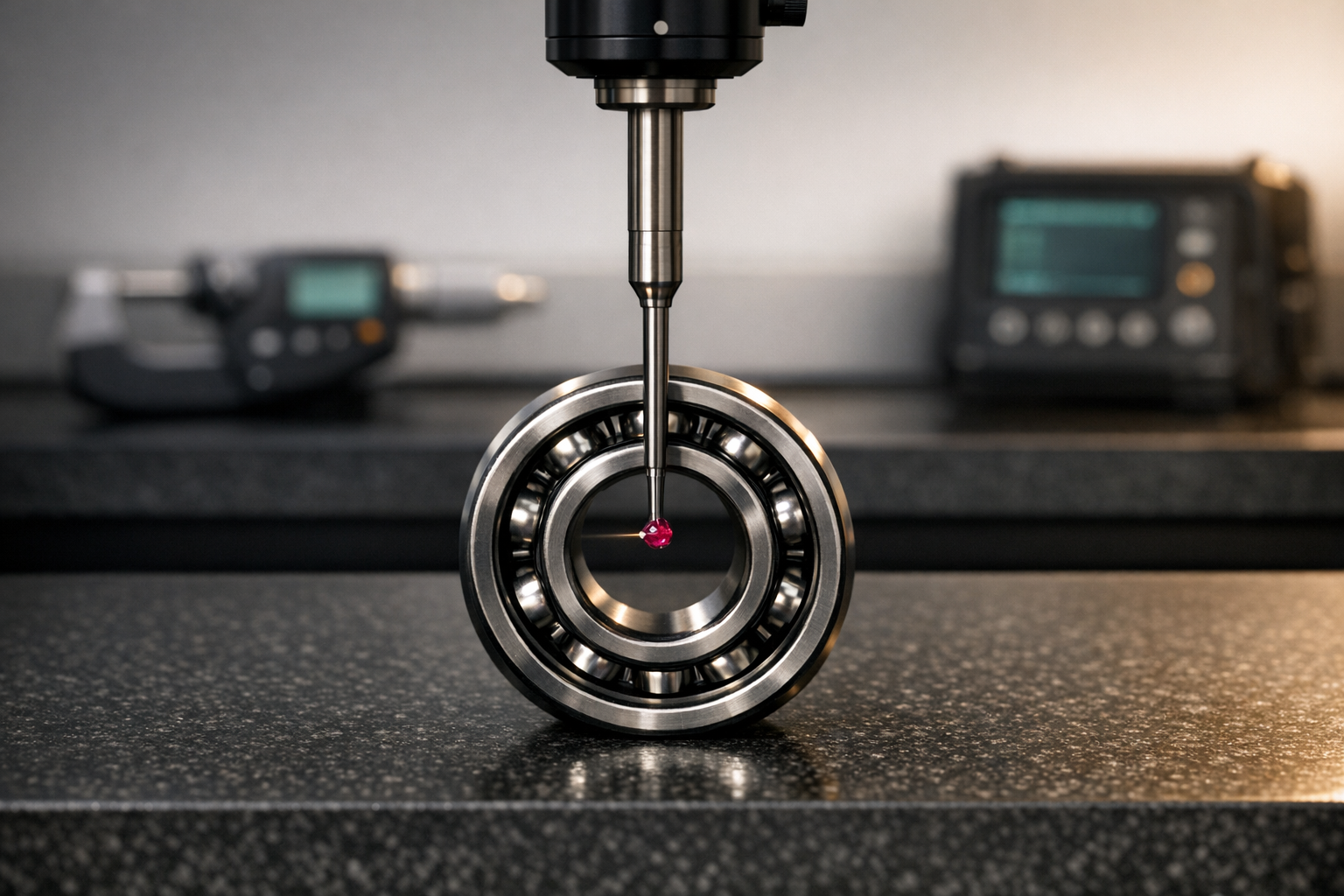
Rigorous inspection catches issues before they ship. Dimensional checks and functional testing protect end users. Quality assurance keeps the bearing honest.
12. Installation and Alignment Best Practices
Mounting surface preparation
Flat, rigid mounting surfaces are critical. Any distortion will transfer straight into the bearing. Good prep work pays dividends down the road.
Proper fastening methods
Even bolt torque matters more than some folks realize. Uneven clamping can warp the rings and ruin accuracy. Follow the spec and don’t wing it.
Avoiding installation-induced inaccuracies
Careless installation can undo all the precision built into the bearing. Cleanliness and alignment are key. Treat it like the precision component it is.
13. Maintenance and Service Life
Lubrication requirements
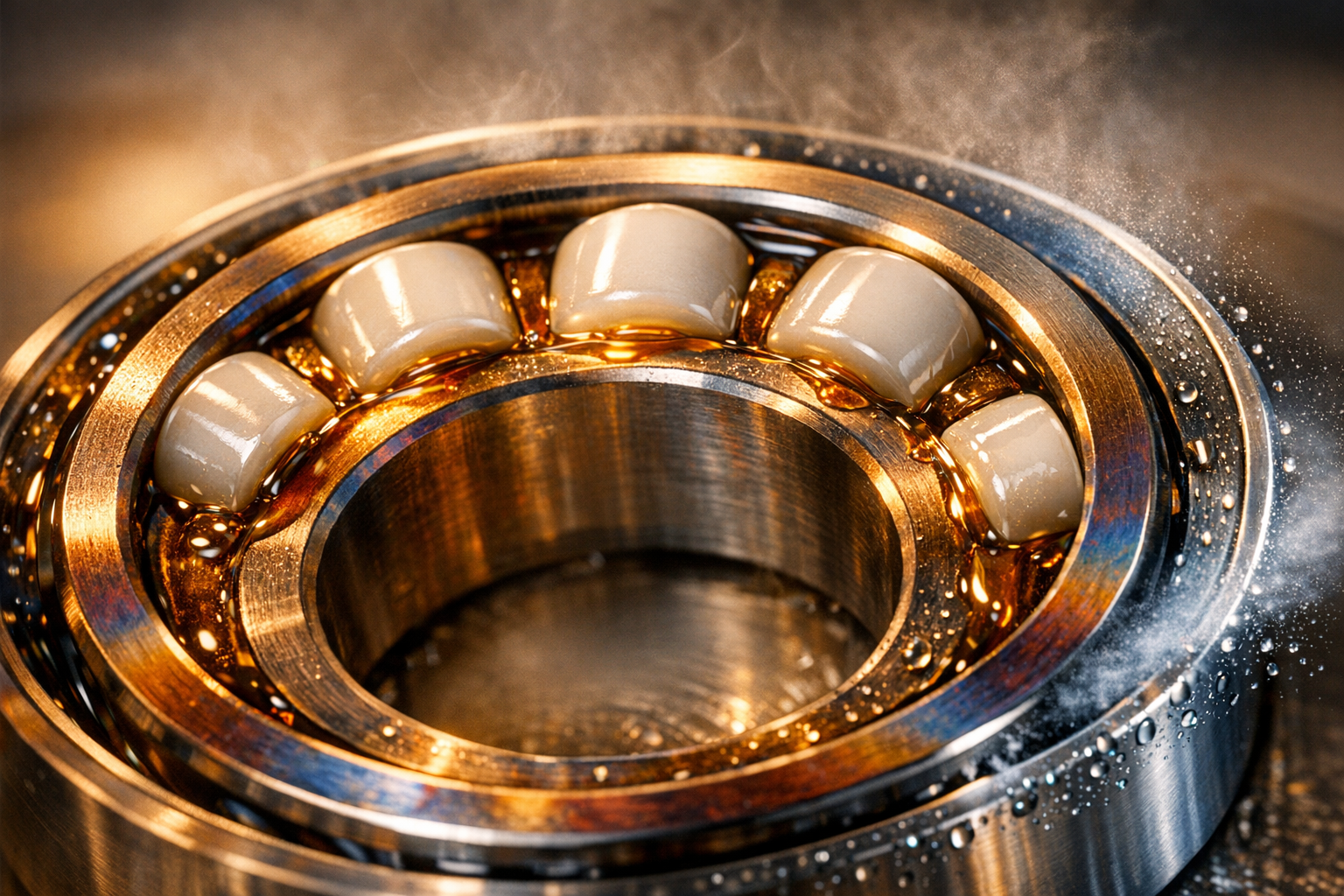
Proper lubrication keeps friction and wear under control. Grease selection should match speed and load conditions. When in doubt, follow the manufacturer’s guidance.
Wear patterns and inspection
Regular inspections reveal early signs of trouble. Uneven wear often points to misalignment or overload. Catching issues early saves time and money.
Long-term accuracy retention
With correct care, these bearings hold accuracy for years. Stiffness and geometry remain stable over long service intervals. That consistency is a major advantage.
14. Cost Efficiency Over the Product Lifecycle
Initial cost versus performance value
Upfront costs can be higher than basic bearings. However, the performance payoff is substantial. In most cases, the math works out in favor of crossed rollers.
Reduced maintenance expenses
Lower wear and fewer components reduce maintenance needs. Downtime drops, and service intervals stretch out. That’s real savings over time.
Downtime and productivity impact
Reliable bearings keep machines running. Less downtime means higher throughput. From a production standpoint, that’s money in the bank.
15. Common Design Mistakes to Avoid
Misjudging load conditions
Underestimating loads is a classic mistake. Bearings need accurate load data to perform properly. Guesswork leads to premature failure.
Ignoring mounting rigidity
A stiff bearing needs a stiff structure to match. Flexible mounts undermine performance. The surrounding design matters just as much as the bearing itself.
Overlooking accuracy requirements
Not every application needs ultra-high precision. Over-specifying can waste budget. The key is matching bearing capability to actual requirements.
16. Future Trends in Crossed Roller Slew Bearings
Advances in materials and coatings
New alloys and surface treatments are pushing performance boundaries. Improved wear resistance and corrosion protection are on the horizon. These advances will extend service life even further.
Integration with smart systems
Sensors and condition monitoring are becoming more common. Bearings are no longer dumb components. Smart integration enables predictive maintenance.
Growing demand for ultra-precision motion
As machines get smarter and smaller, accuracy demands keep rising. Crossed roller slew bearings are well positioned to meet that challenge. The future looks tight, stiff, and highly precise.