Bearings Manufacturer Since 2000

Trusted by 1,000+ Clients

Ball Bearings

Table of Contents

Definition of Ball Bearings

Definition

Ball bearings are essential mechanical elements, consisting of a series of spherical balls enclosed within a circular ring or cage. Typically crafted from materials like steel or ceramic, they incorporate a retainer or cage to ensure the uniform positioning of the balls. This specific arrangement empowers them to fulfill critical roles in a wide array of machinery and industrial applications.

Ball Bearings Structure

FHD Bearings is an ISO 9001:2015 certified manufacturing enterprise that stocks a full range of deep groove ball bearings, angular contact ball bearingsthrust ball bearings, Self-aligning ball bearings and ceramic ball bearings. With over 1,200 different bearing sizes and over 250K bearings in stock.

Materials of Ball Bearings

Materials

– The most common material for ball bearings due to its high durability and affordability.

– Offers corrosion resistance and is suitable for applications where hygiene is important.

– Known for its exceptional hardness, low weight, and resistance to high temperatures and corrosion.

– Combines high hardness and corrosion resistance, often used in high-performance applications.

deep groove bearings

Polyethylene

– Used in applications where non-metallic, lightweight, and corrosion-resistant bearings are required.

Polypropylene

– Suitable for applications with low loads and chemical resistance needs.

Features of Ball Bearings

Features
Self-Aligning-Ball-Bearings
  • Low Friction: Ball bearings are designed to reduce friction between moving parts, leading to energy efficiency and smooth operation.
  • Radial and Axial Load Support: They can support both radial (perpendicular to the shaft) and axial (parallel to the shaft) loads, making them versatile for various applications.
  • Compact Design: Ball bearings are relatively small and compact, making them suitable for applications with limited space.
  • High Speed Capability: They are capable of operating at high speeds, which is essential in many industrial and automotive applications.
  • Low Noise and Vibration: Properly lubricated ball bearings produce minimal noise and vibration, contributing to a quieter and smoother operation of machinery.
  • Corrosion Resistance: Stainless steel and ceramic ball bearings are known for their resistance to corrosion, making them suitable for harsh environments.
  • High Precision: Ball bearings provide precise and consistent motion, critical in applications requiring accuracy.
  • Customization: Some ball bearings can be customized for specific applications, including OEM and ODM options.

Advantages of Ball Bearings

Advantages
  • Enhanced Performance: Improved efficiency and reduced wear in machinery.
  • High Load Capacity: They can support both radial and axial loads, making them versatile and capable of handling various types of forces.
  • Smooth Operation: Ball bearings provide smooth and precise motion, contributing to the overall performance of machinery and equipment.
  • High Speed Capability: Ball bearings can operate at high speeds, making them essential in applications where rapid rotation is required.
  • Diverse Types: Ball bearings come in a variety of configurations, allowing for precise customization to meet specific application requirements.
  • Durability: Depending on the material and quality, ball bearings can be highly durable and resistant to wear and tear.
  • Versatility: They are used in a wide range of industries, from automotive and manufacturing to medical devices and aerospace.
Ceramic MR115

Types of Ball Bearings

Taxonomy
Ball Bearing,ball bearings

Deep Groove Ball Bearings

Deep groove ball bearings are particularly versatile.They are suitable for high and very high speeds, accommodate radial and axial loads in both directions.

Ball Bearing,ball bearings

Angular Contact Ball Bearings

Angular contact ball bearings support both radial andaxial loads through asymmetric races that house the bearing's spherical rolling elements, also called bearing balls on an angle.

Ball Bearing,ball bearings

Thrust Ball Bearings

Thrust ball bearings are separable bearings.The single-acting thrust ball bearing consists of a shaft washer, a housing washer and a ball set with cage.

Ball Bearing,ball bearings

Self-aligning Ball Bearings

Self-aligning ball bearings have two rows of balls, a common sphered raceway in the outer ring and two deep uninterrupted raceway grooves in the inner ring.They are available open or sealed.
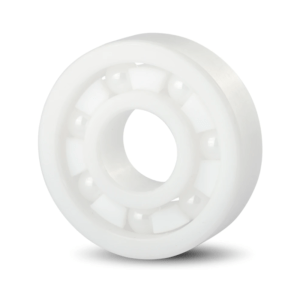
Full Ceramic Bearings - Zirconia Oxide Open

Ceramic Ball Bearings

Full ceramic ball bearings constructed entirely of ceramic material. Inner/outer races and balls are made of either Silicon Nitride (Si3N4), Zirconium Oxide (ZrO2) or Silicon carbide ( Sic ).

Ball Bearing,ball bearings

Thin Section Ball Bearings

Thin Section Bearings as listed below are available open, shielded or sealed. Available in a variety of standard and custom inch and metric sizes.

Ball Bearing,ball bearings

Stainless Steel Ball Bearings

Mainly stainless steel deep groove ball bearings. With their high resistance to corrosion, durability, and low-friction, they are an ideal choice for many industries.

Ball Bearing,ball bearings

Flanged Ball Bearings

Flanged bearings have a solid steel flange on the outer ring. This allows the bearing to be more easily located in a housing. The flange can also help to prevent axial movement of the bearing in the event of a thrust load on the bearing.

Do you have any questions?

Send inquiry to our expert for support

Applications of Ball Bearings

Applications
deep-groove-ball-bearings-500x500
  • Automotive Industry:

    • Wheel hubs: Ball bearings support vehicle wheels, allowing them to rotate smoothly.
    • Transmission systems: They are used in gearboxes and differential units for power transmission.
    • Electric motors: Ball bearings reduce friction, enhancing the efficiency of motors.
  • Manufacturing and Machinery:

    • Conveyor systems: Ball bearings facilitate the movement of materials on conveyor belts.
    • Industrial pumps and compressors: They are vital for smooth, low-friction operation.
    • Agricultural equipment: Ball bearings support components like tractor wheels and harvesters.
  • Aerospace Industry:

    • Aircraft landing gear: Ball bearings are used in landing gear systems for durability and reliability.
    • Aircraft engines: They play a crucial role in aviation, reducing friction and ensuring efficient operation.
  • Medical Equipment:

    • Precision instruments: Ball bearings are used in medical devices for precise motion and low noise.
  • Electronics:

    • Computer hard drives: Ball bearings enable the smooth rotation of the drive’s platters.
    • Cooling fans: They are used in fans to ensure quiet and efficient cooling.
  • Rail Transportation:

    • Train wheels and axles: Ball bearings are integral in rail transport for smooth movement and low friction.
  • Power Tools:

    • Electric drills and saws: Ball bearings are used in the moving parts of power tools for efficiency and durability.
  • Renewable Energy:

    • Wind turbines: Ball bearings are employed in wind turbine systems to support the rotating blades and generator components.

Key Manufacturing Process of Ball Bearings

Manufacturing Process

Raw Material Selection:

The process begins with the selection of the appropriate raw materials, typically steel, stainless steel, or ceramic, depending on the desired characteristics of the bearings.

Forging or Cold Heading:

The selected material is shaped into a rough spherical shape using forging or cold heading processes. This creates the initial blank or preform of the bearing.

Turning and Grinding:

The preform undergoes precision turning and grinding to achieve the desired outer and inner ring dimensions, as well as ball groove specifications.

Heat Treatment:

The components are heat-treated to enhance their hardness, durability, and resistance to wear. This process typically includes quenching and tempering.

Ball Production:

Steel balls are typically produced separately through a series of processes, including cold heading, flashing, grinding, and heat treatment. Ceramic balls are formed differently based on the material used.

Assembly:

The outer and inner rings, along with the ball bearings, are assembled into a bearing unit. Cages or retainers may also be added to keep the balls evenly spaced.

Lubrication:

Bearings are lubricated with grease or oil to reduce friction and ensure smooth operation. The choice of lubrication depends on the application.

Quality Control and Inspection:

Each bearing undergoes rigorous quality control and inspection to check for dimensional accuracy, smoothness, and other critical parameters. This step ensures that only high-quality bearings are shipped to customers.

Packaging and Distribution:

The finished bearings are packaged and distributed to customers, whether they are original equipment manufacturers (OEMs), distributors, or end-users.

Ball Bearing,ball bearings

FAQ - Frequently Asked Questions

FAQ
Self Aligning Ceramic Ball Bearings - Zirconium Oxide (ZrO2)
Q: What is a ball bearing?
A: A ball bearing is a type of rolling-element bearing that uses balls to maintain separation between bearing races, reducing friction and supporting radial and axial loads.
Q: What are the main types of ball bearings?
A: The main types include deep groove ball bearings, angular contact ball bearings, self-aligning ball bearings, thrust ball bearings, and miniature ball bearings.
Q: What are ball bearings used for?
A: Ball bearings are widely used in electric motors, automotive components, industrial machinery, pumps, gearboxes, and precision equipment to reduce friction and improve efficiency.
Q: What materials are ball bearings made of?
A: Ball bearings are typically made from chrome steel, stainless steel, or ceramic materials, depending on application requirements such as load, speed, and corrosion resistance.
Q: How do I choose the right ball bearing?
A: Selection depends on load type, speed, operating environment, precision requirements, lubrication method, and mounting space.
Q: What is the difference between radial and thrust ball bearings?
A: Radial ball bearings are designed to support loads perpendicular to the shaft, while thrust ball bearings are designed to support axial loads parallel to the shaft.
Q: How long do ball bearings last?
A: The service life of ball bearings depends on load, speed, lubrication, and operating conditions, typically ranging from thousands to tens of thousands of operating hours.
Q: What causes ball bearing failure?
A: Common causes include improper lubrication, contamination, overload, misalignment, corrosion, and incorrect installation.
Q: How should ball bearings be maintained?
A: Proper maintenance includes regular lubrication, keeping the environment clean, monitoring temperature and vibration, and ensuring correct installation and alignment.
Q: Can ball bearings operate at high speeds?
A: Yes, ball bearings are suitable for high-speed applications due to their low friction design, especially when properly lubricated and selected for the correct operating conditions.

Installation and Maintenance of Ball Bearings

Installation and Maintenance

Installation

  • Clean and Prepare: Ensure that the installation area is clean and free from debris or contaminants that could affect the bearing.
  • Inspect Bearings: Examine the bearings for any damage or defects before installation. Do not use damaged bearings.
  • Proper Handling: Handle bearings with care, using clean, dry hands or gloves to avoid transferring contaminants.
  • Shaft and Housing: Ensure the shaft and housing are clean and free from burrs or nicks that could damage the bearing.
  • Fit Tolerance: Pay attention to the bearing’s fit tolerance. Follow manufacturer guidelines for the appropriate fit.
  • Lubrication: Lubricate the bearing according to manufacturer recommendations, using the correct type and amount of lubricant.
  • Mounting: Carefully mount the bearing onto the shaft, ensuring that it is properly aligned with the housing.
  • Securing: Secure the bearing in place, using the correct methods, such as set screws, locknuts, or adapter sleeves, as per the bearing design.
  • Sealing: Ensure that seals or shields are properly installed to protect the bearing from contamination.
  • Alignment: Precisely align the bearing to prevent misalignment issues, which can lead to premature wear.
  • Tightening: Follow manufacturer torque recommendations when tightening mounting bolts or screws.

Maintenance:

  • Regular Inspection: Periodically inspect the bearings for signs of wear, overheating, or unusual noise during operation.
  • Lubrication Maintenance: Maintain proper lubrication according to the manufacturer’s guidelines. Re-grease or re-oil as needed.
  • Temperature Monitoring: Keep an eye on operating temperatures; an increase may indicate issues with lubrication or alignment.
  • Seal and Shield Inspection: Check seals and shields for damage and replace them if they are compromised.
  • Vibration Analysis: Utilize vibration analysis tools to detect irregular vibrations that may signify problems with the bearing.
  • Re-greasing: Re-grease the bearings at regular intervals to maintain proper lubrication and prevent overheating.
  • Cleaning: Clean the surrounding area to prevent contamination from entering the bearing.
  • Replacement: When a bearing shows signs of significant wear or damage, replace it promptly to avoid equipment failure.
  • Documentation: Maintain records of installation and maintenance procedures, including dates and any observed issues.
  • Training: Ensure that personnel responsible for installation and maintenance are trained and knowledgeable about best practices.
Ball Bearing,ball bearings

Related Posts

Related Posts

Consult

This site uses cookies

We and selected third parties use cookies (or similar technologies) for technical purposes, to enhance and analyze site usage, to support our marketing efforts, and for other purposes described in our Cookie Policy