Table of Contents

Lee
Introduction to Silicon Carbide Bearings
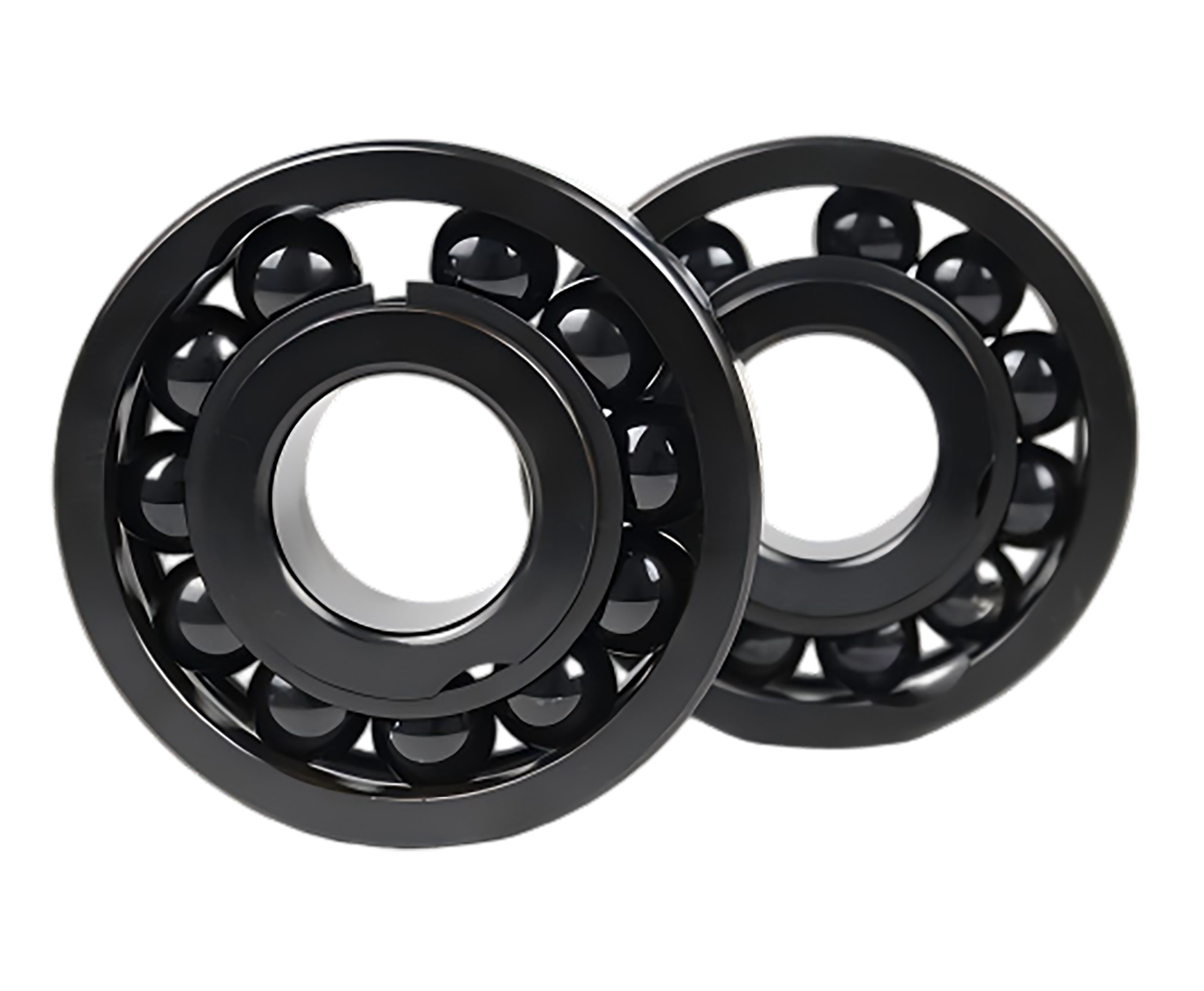
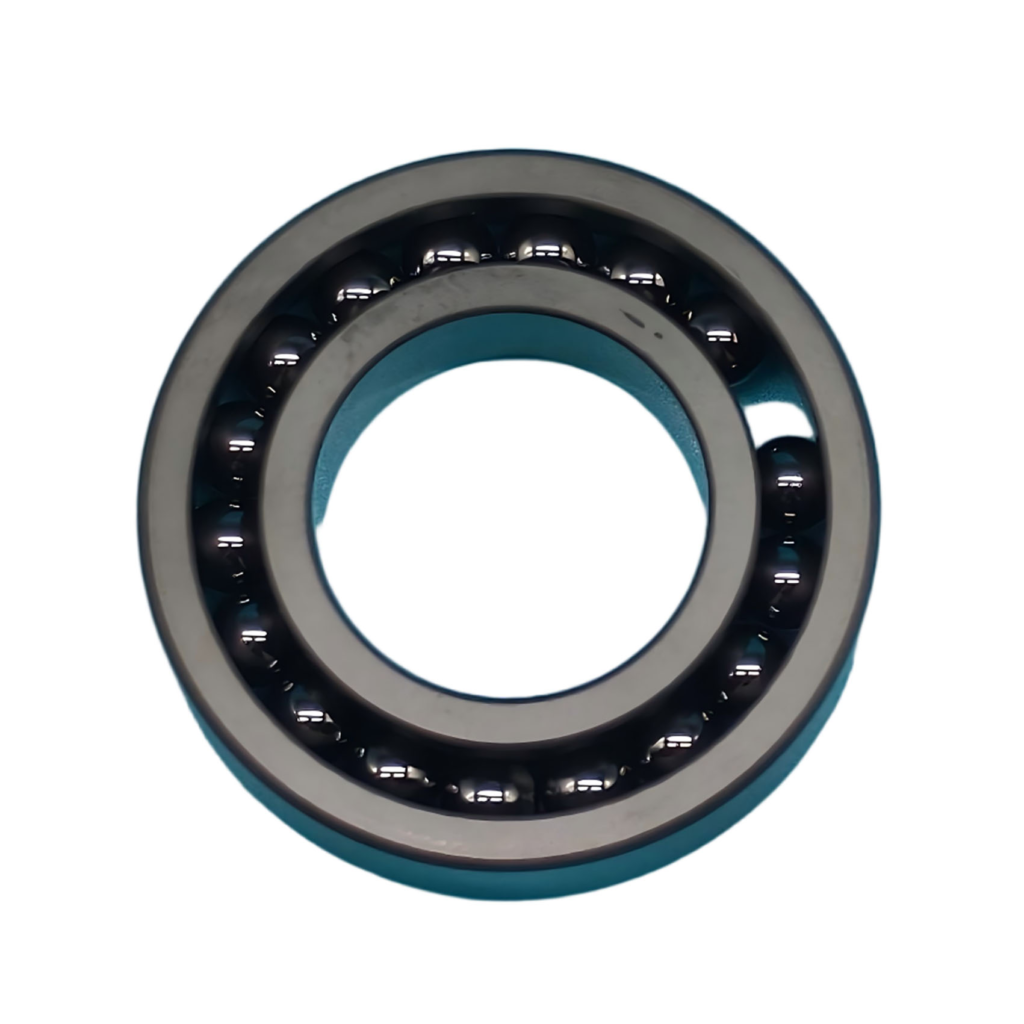
Silicon carbide (SiC) ceramic bearings are a type of mechanical bearing manufactured from the advanced ceramic material, silicon carbide. Embodying the numerous exceptional properties inherent to silicon carbide, they are aptly regarded as the “special forces” or “elite” of the bearing world—capable of effortlessly withstanding the challenges posed by harsh operating conditions, such as extreme temperatures and severe corrosion.
Key Characteristics
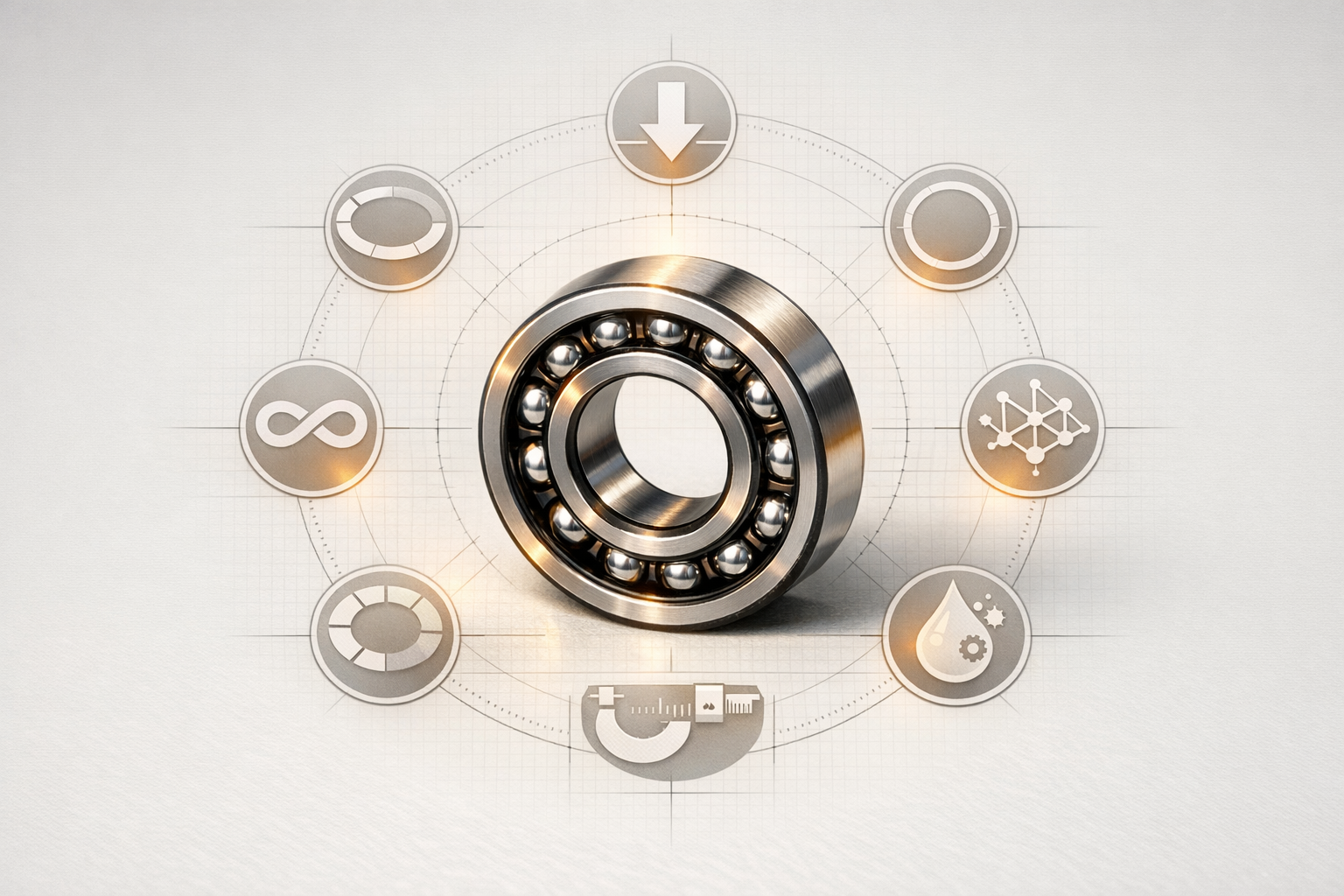
Exceptional durability: Hardness second only to diamond, outstanding wear resistance, and long service life, greatly reducing maintenance and replacement frequency.
High/low temperature resistance: Excellent high-temperature strength; some materials can retain their strength up to over 1400 °C. Good thermal shock resistance enables them to adapt to drastic temperature changes.
Strong chemical inertness: Resistant to almost all strong acids, strong alkalis, and organic solvents, performing prominently in chemical environments.
Self-lubricating: The material itself has a low friction coefficient, allowing it to function properly under oil-free, oilless dry-running conditions, making it particularly suitable for vacuum or clean environments.
Lightweight and high strength: Weighing about 40% of steel, yet with a high Young’s modulus, it deforms little under stress, facilitating high-speed operation and higher precision.
Physical characteristics:
Non-magnetic: Introduces no magnetic contamination, suited for precision instruments and medical devices (e.g., MRI).
High thermal conductivity: Effectively dissipates heat generated by high-speed operation or friction.
Low thermal expansion coefficient: Dimensions change very little with temperature, ensuring high precision and stability at elevated temperatures.
Main Application Fields
Thanks to these properties, silicon carbide ceramic bearings have become a reliable choice in the following key areas:
Aerospace: Such as turbopumps in rocket engines, which must withstand extreme temperatures and speeds.
Semiconductor manufacturing: Clean, non-magnetic, and corrosion-resistant, meeting the stringent environment required for chip fabrication.
Chemical and petrochemical: An ideal choice for seals and bearings in pumps and reactors handling highly corrosive fluids.
Medical and food: Corrosion-resistant and oil-free self-lubricating properties make them suitable for medical instruments and food processing equipment that require sterilization cleaning and freedom from contamination.
New energy: In electric vehicle drive motors, their resistance to electrical erosion is a key advantage.
Precision manufacturing: Used in high-speed machine tool spindles and precision optical instruments to ensure high accuracy and long life.
Manufacturing Processes
High-performance silicon carbide bearings are typically made through one or more of the following advanced ceramic processes, which may cause slight differences in material properties:
Pressureless sintering (SSiC): High purity, extremely high density, excellent overall performance.
Reaction bonding (SiSiC): Near-net-shape forming with minimal shrinkage, ideal for making large, complex-shaped components.
Hot pressing (HPSiC): Achieves extremely high mechanical properties, such as fracture toughness and hardness, through high pressure, suitable for highly demanding applications.
Limitations and Challenges
When choosing silicon carbide ceramic bearings, their inherent limitations must also be understood:
Intrinsic brittleness: As a ceramic, its ability to withstand impact and instantaneous overload is weak; improper design or use can lead to catastrophic fracturing.
High cost: Demands on raw materials (high-purity ultrafine powder), complex processes, and high-precision finishing mean the price is far higher than that of steel bearings of the same specifications.
Difficult machining: Because of its extreme hardness, subsequent precision processes like grinding and polishing are time-consuming and expensive, which is the main reason for the high cost.
1. Silicon Nitride (Si₃N₄) Ceramic Bearings
Core strength: Light, fast, and impact resistant
Compared to silicon carbide, silicon nitride is currently the ceramic bearing material with the best overall performance, particularly in high-speed and high-precision applications.
Ultra-lightweight: Its density is the lowest among the three materials. When used for rolling elements (such as balls), the centrifugal force generated during high-speed rotation is minimal, significantly reducing friction and heat generation—this is key to achieving ultra-high-speed spindles.
Good impact toughness: This is the most outstanding mechanical advantage of silicon nitride. Its fracture toughness is superior to that of both silicon carbide and zirconia, making it less “brittle” and able to withstand a certain degree of impact and vibration, offering higher reliability.
Excellent thermal shock resistance: Its thermal expansion coefficient is very small and thermal conductivity is good, so it can comfortably withstand rapid temperature changes.
Typical applications:
High/ultra-high-speed machine tool spindles: This is its core field, easily handling speeds of tens of thousands of revolutions per minute.
Electric vehicle drive motors: Its excellent electrical insulation properties perfectly solve the problem of electrical erosion caused by shaft currents, making it one of the top choices for electric drive bearings.
Vacuum and unlubricated environments: Like silicon carbide, it is self-lubricating, but it is lighter, making it suitable for precision vacuum equipment.
Wind power generation: Used in insulated bearings to prevent electrical erosion damage.
In summary: If you need a bearing that can rotate at high speed, resist impact, and provide electrical insulation, silicon nitride is usually a more well-rounded choice than silicon carbide.
2. Zirconia (ZrO₂) Ceramic Bearings
Core strength: Ultra-smooth, ultra-low friction, thermal and electrical insulation
Zirconia’s performance differs greatly from the previous two; its strength lies in extreme demands for low friction and electrical/thermal insulation.
Ultra-low friction coefficient and extremely high surface finish: This is its most prominent feature. Zirconia’s friction coefficient is extremely low, and it can achieve a nearly mirror-like finish, so running friction is minimal, making it especially suitable for clean environments where microscopic wear debris is unacceptable.
Excellent fracture toughness: Through a special transformation toughening mechanism, zirconia has a very high level of fracture toughness among ceramics, partly solving the “brittleness” problem.
Almost completely insulating and adiabatic: Zirconia has one of the lowest thermal conductivities of all structural ceramics, acting as an excellent thermal insulator. It also possesses very high volume resistivity and is a complete electrical insulator.
Good chemical stability: Resistant to acid and alkali corrosion, but not as much as silicon carbide. Beware that strength may degrade under prolonged exposure to hot water vapor or humid heat environments.
Typical applications:
Food, medical, and semiconductor equipment: Its non-magnetic, insulating, low-friction, and oil-free self-lubricating characteristics make it an ideal choice for environments with extremely high cleanliness requirements.
High-temperature furnaces and thermal insulation components: Used in bearings or structural parts at high temperatures, exploiting its adiabatic properties.
Optical fiber and textile machinery: Its low-friction, high-polish surface avoids damaging extremely fine wires or filaments.
All-ceramic teeth, artificial joints: With excellent biocompatibility, color close to natural teeth, non-magnetic, and wear-resistant, it is a star material in the biomedical field.
In summary: If you need ultra-low friction, dust-free operation, thermal insulation, or full electrical insulation, choose zirconia; but if the operating environment involves severe acid/alkali corrosion, silicon carbide must still be considered.
Core Performance Comparison of the Three
For an intuitive comparison, their key properties are summarized below:
| Performance Indicator | Silicon Carbide (SiC) | Silicon Nitride (Si₃N₄) | Zirconia (ZrO₂) |
|---|---|---|---|
| Core Competency | Extreme chemical corrosion resistance | High speed, high toughness, strong overall | Ultra-low friction, adiabatic, biocompatible |
| Density | Low | Lowest | Highest (about 80% of steel) |
| Hardness | Extremely high (second only to diamond) | Very high | Lower |
| Fracture Toughness (Impact resistance) | Low (brittle) | High | High |
| Thermal Expansion Coefficient | Low | Very low | Highest |
| Thermal Conductivity | Extremely high | High | Extremely low (insulating) |
| Max. Service Temperature | Very high (>1400 °C) | High (~1000 °C) | Lower (~750 °C) |
| Electrical Insulation | Semiconductor (tunable) | Excellent insulator | Complete insulator |
| Main Weakness | High brittleness, high cost | High cost | Low thermal conductivity, low temperature lim |
Final Selection Suggestions
Pursuing ultimate speed and impact safety: Silicon nitride (Si₃N₄) is the current mainstream in high-end industry (machine tools, electric vehicles).
Handling highly corrosive fluids and extreme heat: Silicon carbide (SiC) is irreplaceable.
Needing clean, dust-free, ultra-low friction, or thermal/electrical insulation: Zirconia (ZrO₂) has unique advantages.
These three materials do not replace each other but form a perfect complement under different harsh operating conditions. In practice, silicon nitride balls are often combined with silicon carbide rings to form hybrid bearings that meet more complex requirements.
1. Hybrid Ceramic Bearings: The Art of Combining Strengths
This is the most common form in current high-end industrial applications, with typical combinations including:
1. Silicon Nitride Balls + Steel Rings
This is the most widely used combination, especially in high-precision motorized spindles and electric vehicle drive motors.
Design logic:
Balls made of silicon nitride: Exploiting its low density to reduce centrifugal force and gyroscopic moments during high-speed rotation, decreasing friction and heat. Silicon Nitride’s high hardness also resists the intrusion of hard particles, reducing raceway damage.
Rings made of bearing steel: Capable of withstanding high structural stress, and its thermal expansion coefficient is more compatible with the machine’s steel spindle and housing, maintaining stable preload and fit clearance with temperature changes. The cost is also far lower than that of all-ceramic rings.
Typical conditions: High speed, short-term impact, and where electrical insulation is required.
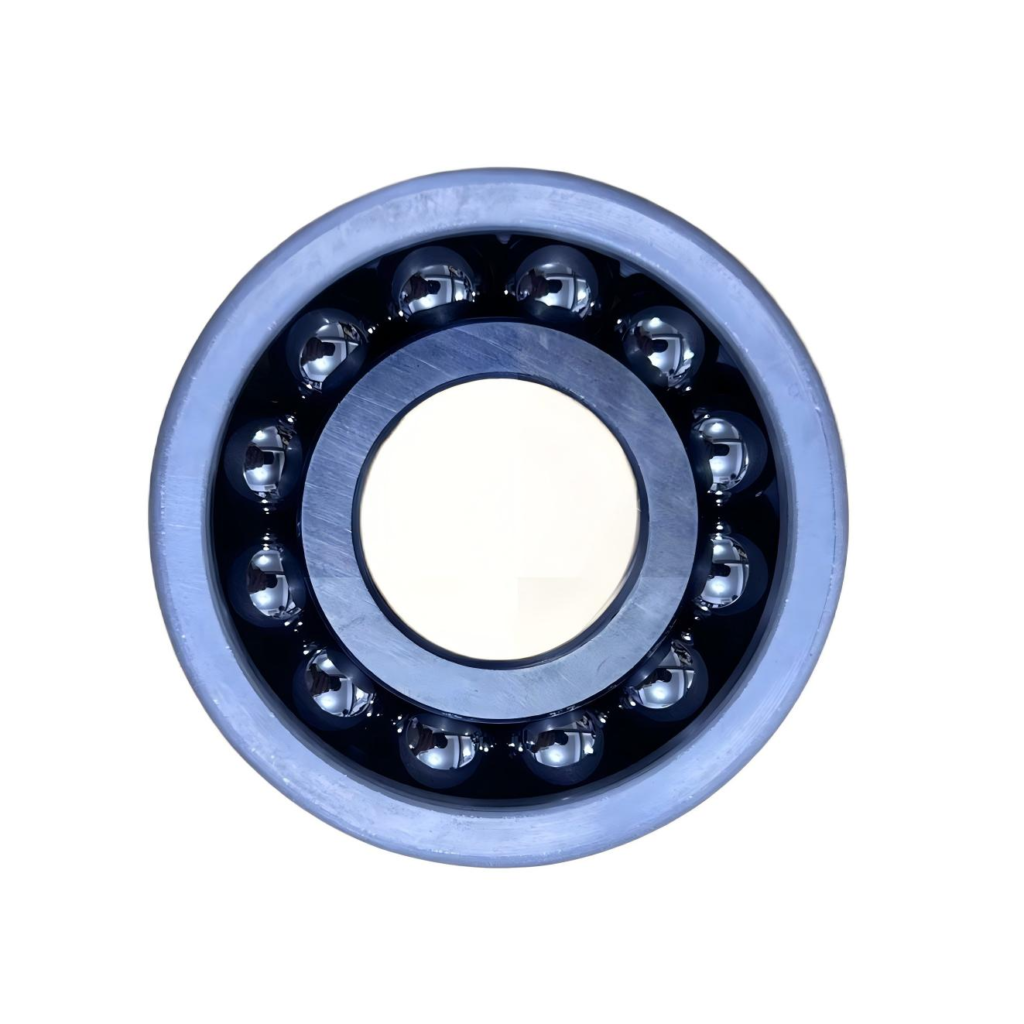
2. Silicon Carbide Balls + Silicon Carbide Rings (All-SiC)
This is the pure silicon carbide bearing you originally asked about.
Design logic: Born for ultimate corrosion and high-temperature resistance. In strong acids, strong alkalis, or high-temperature fluids, any metal or even silicon nitride may corrode or oxidize; only all-SiC can survive.
Typical conditions: Submerged bearings in chemical pumps, semiconductor wet etching equipment, ultra-high-temperature furnaces.
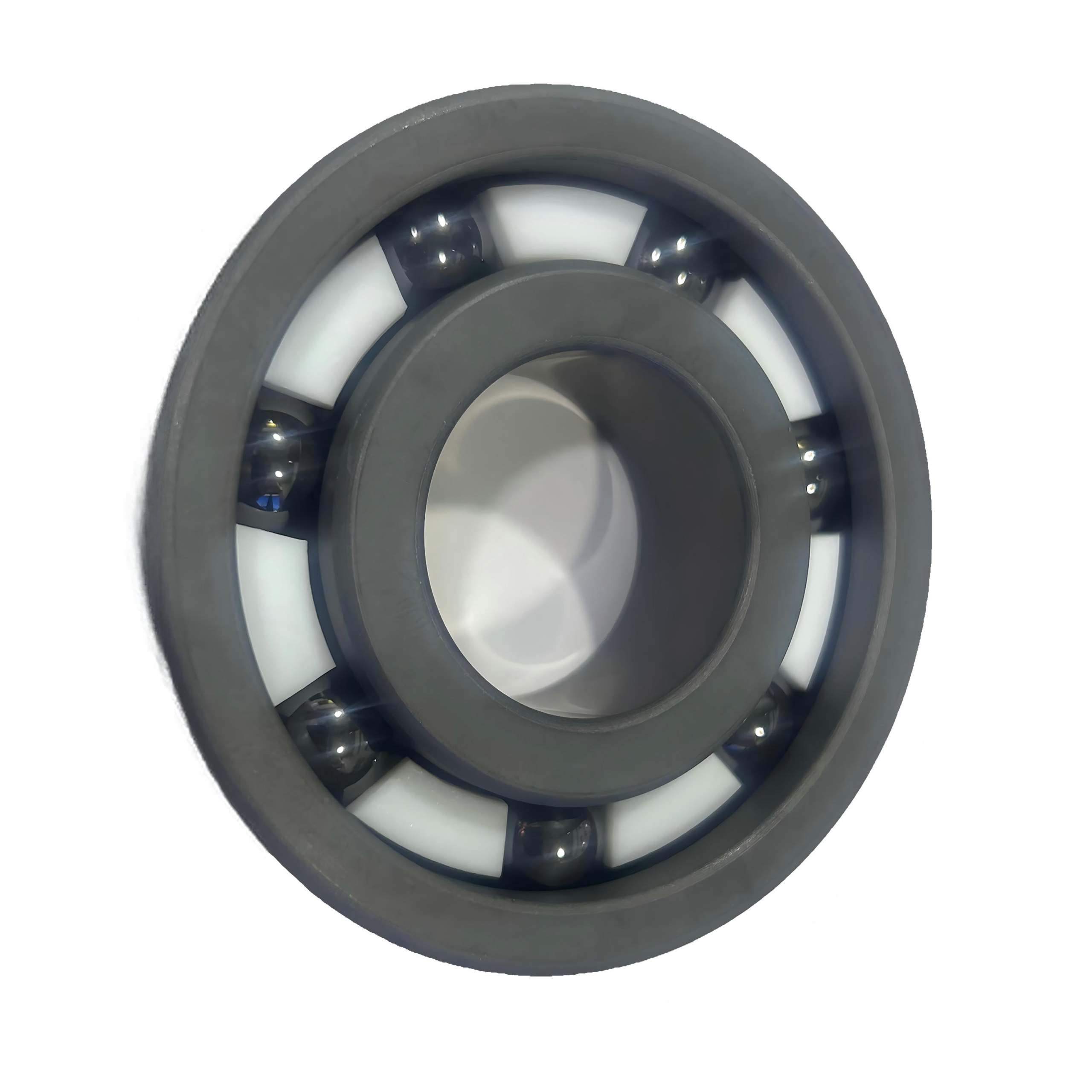
3. Silicon Nitride Balls + Zirconia Rings
This is a special combination that exploits the full insulation and adiabatic properties of zirconia rings.
Design logic: For places requiring complete electrical and thermal insulation while still demanding a certain bearing load capacity. Silicon nitride balls provide rigidity, zirconia rings provide insulation. However, zirconia’s poor thermal conductivity requires special heat dissipation design.
Typical conditions: Specific medical equipment and high-insulation motors.
2. Understanding Material Selection Through Failure Modes
Ceramic bearings are not indestructible; they just fail differently from metal bearings. Understanding failure modes gives deeper insight into material selection.
Main failure causes for steel bearings: Fatigue spalling, wear, corrosion, seizing.
Main failure causes for ceramic bearings:
Brittle fracture/shattering: The number one risk. Caused by instantaneous overload, hammering during installation, or severe misalignment. Once the critical stress is exceeded, it shatters directly instead of deforming.
Abrasive wear: Although extremely hard, under boundary lubrication or dry running, hard particles (such as self-generated debris or external sand) can cause a ploughing effect and accelerate surface degradation.
Thermal shock cracking: When internal thermal stress from rapid heating or cooling exceeds the tensile strength and the material fractures. The most resistant is silicon nitride, followed by silicon carbide; zirconia is the most sensitive.
Corresponding strategies for material selection:
Fearing impact and vibration → Prioritize silicon nitride, sacrificing some hardness and temperature resistance.
Long-term, sustained dry running → Both silicon carbide and silicon nitride have self-lubricating properties, but zirconia generates serious heat under dry friction and has potential degradation risks; careful assessment is needed.
Risk of contamination → If metal ion contamination is a concern, avoid steel rings and use all-ceramic bearings, selecting silicon carbide or zirconia based on corrosion resistance needs.
3. Common Material Selection Fallacies
Fallacy 1: “Ceramics are hard, so they are more suitable for heavy loads.”
Correction: Ceramic hardness provides resistance to localized deformation, but their low tensile strength and fracture toughness mean the overall structure cannot handle heavy loads as well as steel. For heavy-load, low-speed applications, case-hardened steel or specialty alloys are usually more reliable. Ceramic bearings are better at high speed with light or medium loads.
Fallacy 2: “All ceramic bearings are fully insulating.”
Correction: Silicon carbide is a semiconductor, not an insulator; its resistivity can be tuned. Only silicon nitride and zirconia are inherently excellent insulators. In applications requiring protection against shaft currents, such as electric vehicles, rolling elements or coatings must be made of these two, not silicon carbide.
Fallacy 3: “Ceramic bearings require no lubrication for life.”
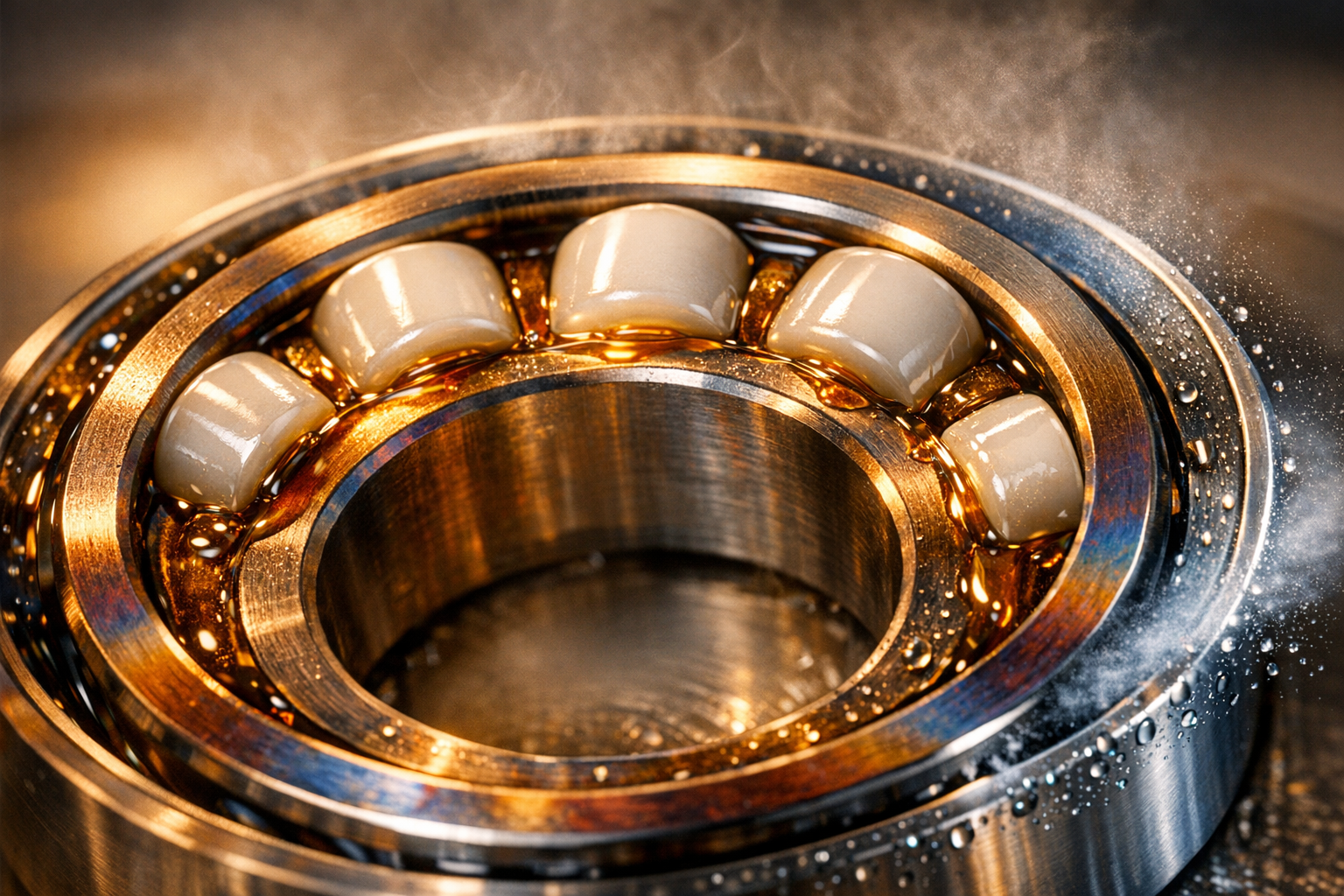
Correction: Although self-lubricating, “maintenance-free” is not the same as “lubricant-free.” Under dry running conditions, the friction coefficient of a ceramic-metal friction pair can be high, accelerating wear. Usually, a tiny amount of lubricant (oil-air, grease) or a solid lubricant coating (e.g., MoS₂, DLC) is recommended to reduce friction loss, carry away heat, and extend service life.
Summary
Silicon carbide, silicon nitride, and zirconia ceramic bearings are not about which one is better overall—each is born to solve specific extreme operating conditions. The core logic can be boiled down to three guiding sentences:
Need to combat high temperature and strong chemical corrosion? → Choose silicon carbide.
It is the “last line of defense” for chemical processing, semiconductor wet processes, and ultra-high-temperature furnaces.
Pursuing high speed, impact resistance, and electrical insulation? → Choose silicon nitride.
It is the “industry standard” for high-speed precision spindles and electric vehicle drive systems.
Need ultra-low friction, complete insulation, or thermal insulation? → Choose zirconia.
It is the “special forces” of precision medical, cleanroom, and vacuum equipment.
A Key Practical Strategy: Hybrid Pairing
Don’t always think of making the entire bearing from a single material; taking the best from each is the wisdom of engineering:
Best overall performance combination: Silicon nitride balls + steel rings. This is the most widely used solution, balancing high speed, insulation, impact resistance, and cost.
Ultimate corrosion resistance combination: All-silicon carbide bearings. This is the only choice when all metals and other refractory materials risk corrosion.
Limitations to Keep in Mind
Brittleness is fundamental: Avoid hammering, instantaneous overload, or misalignment. It will not deform; it will shatter directly.
Not all are insulating: Remember, silicon carbide is a semiconductor. Where electrical insulation is required (e.g., in motors), silicon nitride or zirconia must be used.
High cost: The expense lies in raw materials and the time-consuming, laborious precision grinding required for processing.
Simply put, choosing a ceramic bearing is about identifying the most non-negotiable demand in your operating conditions—whether it is corrosion resistance, high speed, or complete insulation—and letting the right material conquer that challenge.