Bearings Manufacturer Since 2000

Trusted by 1,000+ Clients

Angular Contact Thrust Ball Bearings

Definition of Angular Contact Thrust Ball Bearings

Definition

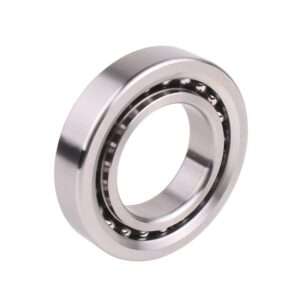
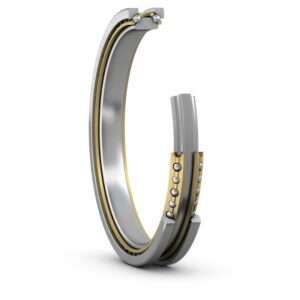
Angular contact thrust ball bearings are designed to to carry axial loads with small radial load carrying capacity. They comprise of a shaft washer, a housing washer, and a ball and cage assembly. These bearings have raceways on the face the washers and are separable.

angular contact Thrust ball bearings

FHD Bearings is an ISO 9001:2015 certified manufacturing enterprise .Our company has a wide range of products in stock covering a wide range of areas to ensure that we are able to meet the diverse needs of our customers. We offer a wide selection of both models and specifications to ensure that our customers are able to quickly obtain the products they need and meet their specific engineering and business requirements.

Materials of Angular Contact Thrust Ball Bearings

Materials

The primary factors for selecting chrome steel material in angular contact thrust ball bearings are its excellent hardness, wear resistance, high load-bearing capacity, and cost-effectiveness in manufacturing.

Stainless Steel

Stainless steel material in angular contact thrust ball bearings is driven by its corrosion resistance, making it ideal for applications exposed to moisture or harsh environments.

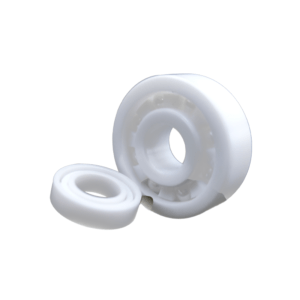
The primary factor for selecting ceramic material in angular contact thrust ball bearings is its combination of high stiffness, low thermal expansion, and corrosion resistance, providing enhanced performance in specific applications.

Angular Contact Thrust Ball Bearing,Thrust Ball Bearings,Thrust Ball Bearing,Angular Contact Thrust Ball Bearings

Nylon

Selecting nylon material in angular contact thrust ball bearings is driven by its low friction, lightweight properties, and corrosion resistance, making it an optimal choice for cage construction in various applications.

Features of Angular Contact Thrust Ball Bearings

Features
Double direction angular contact thrust ball bearing

   1.Axial Load Carrying Capability: Specifically designed to carry axial loads, it can effectively support unidirectional or bidirectional thrust loads.

   2.Rigidity and Accuracy: Highly rigid to provide stability and accuracy at high speeds and high loads.

   3.Preloading: Performance can be optimized through preloading to ensure that bearing rigidity and accuracy are maintained during operation.

   4.Versatility: Suitable for a wide range of industrial applications, including mechanical engineering, aerospace and automotive.

   5.High-speed operation: The design and bearing material selection make it suitable for high-speed rotating environments.

   6.Combinations: Can be used as individual bearings or in pairs to meet the specific needs of different applications.

   7.Wear and Corrosion Resistance: Wear and corrosion resistant materials such as chrome or stainless steel are used to enhance bearing life and reliability.

   8.Lightweight Designs: Some designs utilize lightweight materials, such as ceramics or high-strength plastics, to reduce the overall weight of the bearing.

Advantages of Angular Contact Thrust Ball Bearings

Advantages

   1.High axial load carrying capacity: Specialized design for efficiently carrying axial loads, capable of effectively supporting unidirectional or bidirectional thrust loads.

   2.High Rigidity and Accuracy: Superior rigidity provides excellent stability and accuracy at high speeds and under high load conditions.

   3.Suitable for High-Speed Operation: The structural design and bearing material selection make it suitable for high-speed rotating environments, maintaining stability and reliability.

   4.Versatility: Suitable for a wide range of industrial applications, including mechanical engineering, aerospace, automotive and other fields, with a wide range of applications.

   5.Adjustability: Performance can be optimized through preloading, ensuring that bearing rigidity and precision are maintained during operation.

   6.Long life: Wear- and corrosion-resistant materials, such as chrome or stainless steel, are used to increase bearing life and reliability.

   7.Lightweight Design Options: Lightweight materials, such as ceramics or high-strength plastics, are used in some designs to reduce overall bearing weight.

   8.Flexible Configurations: Can be used as individual bearings or in pairs to meet specific needs in different applications, increasing system flexibility.

Angular Contact Thrust Ball Bearing,Thrust Ball Bearings,Thrust Ball Bearing,Angular Contact Thrust Ball Bearings

Applications of Angular Contact Thrust Ball Bearings

Applications
Angular Contact Thrust Ball Bearing,Thrust Ball Bearings,Thrust Ball Bearing,Angular Contact Thrust Ball Bearings
  • Machine tools and CNC machine tools: Angular contact thrust ball bearings are widely used in machine tool spindle systems to withstand high speed rotation and bi-directional axial loads.
  • Automotive driveline: In automotive transmissions and differentials, angular contact thrust ball bearings are used to withstand axial loads from engine output.
  • Aerospace: Due to the lightweight design and high load carrying capacity, angular contact thrust ball bearings are often used in the aerospace field for aircraft engines, landing gear and flight control systems.
  • Wind power: Angular contact thrust ball bearings effectively support bi-directional axial loads from rotating blades in the main shaft and drive train of wind turbines.
  • Electric motors and power tools: Angular contact thrust ball bearings are used in electric motors and power tools to support high-speed rotation and bear axial loads.
  • Heavy machinery: In heavy equipment such as cranes, excavators and construction machinery, angular contact thrust ball bearings provide reliable axial support.
  • Bearing support: In a variety of industrial equipment, such as roller and roller support systems, angular contact thrust ball bearings can stably support bi-directional axial loads.
  • Medical equipment: Due to their high precision and low noise characteristics, angular contact thrust ball bearings are widely used in medical imaging equipment and surgical equipment.

Do you have any questions?

Send inquiry to our expert for support

Key Manufacturing Process of Angular Contact Thrust Ball Bearings

Manufacturing Process

Selection of raw materials: Selection of high quality bearing steel or other special alloys suitable for bearing manufacture. This ensures that the bearings have sufficient hardness, strength and wear resistance.

Forging: The selected raw materials are forged, and the metal billet is formed into a preliminary shape through heating and hammering processes to provide the basis for subsequent processing.

Heat treatment: Heat treatment of the rough turned parts, usually including quenching and tempering, to improve the hardness, strength and wear resistance of the bearings.

Precision Grinding: Using grinding machines to precision grind the outer diameter, inner diameter and raceways of the bearings to ensure their dimensional accuracy and surface quality.

Assembling: assembling the ground parts into bearing units, including rolling bodies, cages and outer rings.

Lubrication: Add appropriate grease or oil inside the bearing to minimize friction, cool the bearing and provide good lubrication conditions.

Quality inspection: Conduct strict quality inspection, including size measurement, running test, noise test, etc., to ensure that the bearings meet the design requirements.

Packing and Factory: Pack the qualified bearings, ready to be shipped to customers or finally assembled into the equipment.

Angular Contact Thrust Ball Bearing,Thrust Ball Bearings,Thrust Ball Bearing,Angular Contact Thrust Ball Bearings

FAQ - Frequently Asked Questions

FAQ
Super-precision single direction angular contact thrust ball bearing

Q: What are angular contact thrust ball bearings?
A: Angular contact thrust ball bearings are designed to support high axial loads in one direction while also accommodating limited radial loads, using a specific contact angle for optimized load distribution.

Q: How do angular contact thrust ball bearings differ from standard thrust ball bearings?
A: Unlike standard thrust ball bearings that handle only axial loads, angular contact thrust ball bearings can support combined loads due to their contact angle design.

Q: What are the main applications of angular contact thrust ball bearings?
A: These bearings are commonly used in high-speed machine tool spindles, precision equipment, pumps, compressors, and automotive systems.

Q: What contact angles are available for angular contact thrust ball bearings?
A: Common contact angles include 30°, 40°, and 60°, with higher angles providing greater axial load capacity.

Q: Can angular contact thrust ball bearings support axial loads in both directions?
A: A single bearing supports axial load in one direction, but paired configurations can be used to support loads in both directions.

Q: What materials are used in angular contact thrust ball bearings?
A: They are typically made from high-quality bearing steel, stainless steel, or ceramic materials for enhanced performance in demanding environments.

Q: What factors should be considered when selecting angular contact thrust ball bearings?
A: Key factors include axial load, speed, contact angle, rigidity requirements, lubrication, precision class, and operating conditions.

Q: What is preload in angular contact thrust ball bearings?
A: Preload is the internal force applied to the bearing to eliminate clearance, increase stiffness, and improve accuracy in high-precision applications.

Q: How should angular contact thrust ball bearings be lubricated?
A: They can be lubricated with grease or oil depending on speed and load conditions, ensuring reduced friction and extended service life.

Q: How to maintain angular contact thrust ball bearings?
A: Maintenance involves proper lubrication, correct installation, avoiding contamination, monitoring operating conditions, and regular inspection for wear or damage.

Installation and Maintenance of Angular Contact Thrust Ball Bearings

Installation and Maintenance

Installation

  • Bearing Preparation: Before mounting, make sure that the bearing itself is not damaged and check whether the parts are complete.
  • Bearing Alignment: Position the bearing accurately on the shaft and ensure that the locating rings or holes in the bearing are properly aligned.
  • Lubrication: Ensure that grease or oil is properly applied to the inside and outside of the bearing before it is mounted.
  • Fixing: Using the correct tools, tighten the nuts and ensure that the bearing is securely fixed according to the bearing type and design specification.
  • Install Seals (if applicable): Install bearing seals to prevent dirt and contaminants from entering the bearing.
  • Final Check: Perform a final check to ensure that all components are properly installed and that the bearing is free to rotate without abnormality.
Angular-contact-thrust-ball-bearings
Installation and Maintenance of ceramic bearing

Maintenance

  • Regular Lubrication: check the lubrication status of the bearings regularly, add appropriate amount of grease or oil according to the working conditions and requirements.
  • Clean Environment: keep the working environment of the bearings clean, avoid dust and pollutants into the bearings, affecting the normal operation.
  • Vibration Monitoring: Use vibration monitoring equipment to carry out regular inspections, in order to detect abnormal vibration of bearings in time to prevent damage.
  • Temperature Monitoring: Regularly check the temperature of the bearings. Abnormal temperature rise may be an early indication of bearing failure.
  • Preload Check: If the bearing has an adjustable preload, check it periodically and adjust as necessary.
  • Seal Checks: Regularly check bearing seals to ensure good sealing performance and to prevent grease leakage and contamination.
  • Periodic Cleaning: For bearings exposed to harsh environments, clean the surfaces periodically to prevent dirt buildup from negatively affecting the bearings.
  • Regularly Check bearing clearance: For some bearings that require specific clearance, regularly check and adjust the bearing clearance.

Related Posts

LET’S KEEP IN TOUCH!

We’d love to keep you updated with our latest news. 😎

We don’t spam! Read our privacy policy for more info.

Consult

This site uses cookies

We and selected third parties use cookies (or similar technologies) for technical purposes, to enhance and analyze site usage, to support our marketing efforts, and for other purposes described in our Cookie Policy