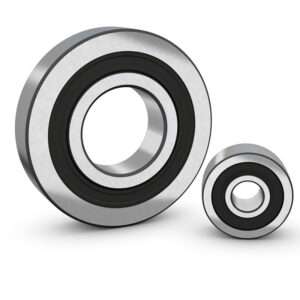
Thrust Ball Bearings
Table of Contents
Categories
-

Adapter Sleeves (9)
-

Ball Bearings (11)
-

Ball Screw Bearings (2)
-

Ceramic Bearings (28)
-

Pillow Block Bearings (4)
-

Plain Bearings (32)
-

Roller Bearings (12)
-

Slewing Bearings (43)
-

Sliding Block (3)
-

Stainless Steel Bearings (27)
-

Super Precision Bearings (6)
-

Thin Section Bearings (9)
-

Track Rollers (4)
-

Universal Joints (1)
Definition of Thrust Ball Bearings
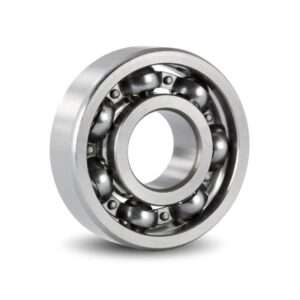
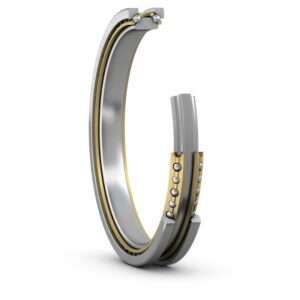
Thrust ball bearings are essential components designed to support and withstand axial loads in industrial machinery. They utilize ball bearings to facilitate smooth rotation and precise axial motion, making them crucial for applications where managing axial forces is a primary concern.

FHD Bearings is an ISO 9001:2015 certified manufacturing enterprise .Our company has a wide range of products in stock covering a wide range of areas to ensure that we are able to meet the diverse needs of our customers. We offer a wide selection of both models and specifications to ensure that our customers are able to quickly obtain the products they need and meet their specific engineering and business requirements.
Materials of Thrust Ball Bearings
-It is the most common and widely used bearing material with good strength and wear resistance.
-The main factors in FHD’s choice of steel are its excellent strength and wear resistance to ensure that thrust ball bearings can operate stably under high load conditions and have long-term durability.
-Suitable for applications with high demands on anti-corrosive environments, such as food processing or the chemical industry.
-The main factor in FHD’s choice of stainless steel is its resistance to corrosion, which ensures that thrust ball bearings remain in reliable operation for a long time in harsh environments, such as in the food processing or chemical industries.
-Light weight, high hardness and corrosion resistance are used to improve bearing performance and reduce friction.
-The main factors for FHD to choose ceramic material for thrust ball bearings were the light weight, high hardness and corrosion resistance of ceramics to improve bearing performance and reduce friction.

Alloy Steel
The use of alloy steels may be an option in high temperature or high load conditions to provide better wear resistance and fatigue resistance.
Plastic
In some special applications, such as medical equipment, lightweight plastic materials can be used for thrust ball bearings.
Features of Thrust Ball Bearings

1.High Axial Load Carrying Capacity: Designed to withstand large axial loads, it has excellent load carrying capacity in the axial direction.
2.High Motion Accuracy: Ball design provides excellent motion control for applications requiring precise axial positioning.
3.Simple construction: Typically consists of internal and external rails and ball bearings, making it relatively simple to manufacture and maintain.
4.Available for High Speed Motion: Low coefficient of friction for high speed motion scenarios and reduced energy loss.
5.Various material options: Different materials can be selected, such as steel chrome, stainless steel, ceramic, etc., to meet different industrial environments and specific requirements.
6.Wide range of applications: Widely used in industrial machinery, automotive industry, aerospace and other fields, suitable for a variety of heavy-duty working conditions.
Advantages of Thrust Ball Bearings
- Compact: Compact construction provides strong axial support in limited space for applications with restricted design space.
- Directional: Designed to withstand axial loads, the clear directionality ensures that axial forces are effectively supported and transmitted.
- Ease of Installation: Relatively simple installation allows for quick and easy integration into a variety of mechanical systems.
- Cost-effective: Provides strong performance at relatively low manufacturing costs, making it a cost-effective bearing choice.
- Adjustable: Some designs allow the bearing clearance to be adjusted to suit the needs of different operating conditions, increasing flexibility.
- Low Friction Loss: Low friction loss during motion helps improve efficiency and reduce wasted energy.
- Adaptable to multiple working conditions: Due to their diverse material options and design flexibility, thrust ball bearings are adaptable to different working conditions and environmental requirements.

Applications of Thrust Ball Bearings

- Industrial Machinery: Used to support and bear large axial loads generated in heavy industrial machinery, such as excavators, presses and so on.
- Automobile transmission system: used in the automobile transmission system of the clutch and transmission bearing, support the axial force generated by the engine.
- Wind Turbine Generator: In the main bearing of wind turbine generator, to support the axial load on the impeller.
- Aerospace: Used to support aircraft landing gear, control rudder surfaces and other key components to ensure axial motion control of the vehicle.
- Water pumps: in the axial bearing system of water pumps to support the axial load on the impeller.
- Power industry: In equipment such as generators and turbines, to support the large axial loads generated by the rotor.
- Medical equipment: Used in some medical equipment such as scanners and X-ray machines to provide precise axial motion control.
- Air Conditioning Compressors: In air conditioning systems, to support axial loads on compressors to ensure stable operation.
- Marine Equipment: Provides support for axial forces in ship’s lift mechanisms and propulsion systems.
- Power Tools: Main bearings used in power tools to support high speed rotation and provide stable axial motion.
Key Manufacturing Process of Thrust Ball Bearings
Material selection: Select appropriate materials, such as steel chromium, stainless steel, ceramics, etc., according to the use of the environment and performance requirements of the bearing.
Cold working process: carry out cold working process, such as cold drawing or cold rolling, in order to improve the mechanical properties of the material, improve the hardness and strength.
Heat treatment: heat treatment process, such as quenching, adjust the crystal structure, increase the hardness and wear resistance of bearings.
Assembly: The assembly of bearing components, such as inner and outer rings and balls, usually requires precision centering and clearance adjustment.
Lubrication: The addition of appropriate grease or oil to minimize friction, cool and prevent rusting of bearings.
Quality inspection: Various quality inspections are performed, including visual inspections, dimensional measurements, bearing motion tests, etc., to ensure that the product meets design and performance standards.
Packaging: Packaging the finished products to ensure that they are not damaged during transportation and storage, and provide clear identification and instructions.

FAQ - Frequently Asked Questions

Q: What are thrust ball bearings?
A: Thrust ball bearings are designed to support axial loads only, allowing smooth rotation between components under high thrust forces.
Q: What types of thrust ball bearings are available?
A: Common types include single-direction thrust ball bearings and double-direction thrust ball bearings for handling axial loads in one or both directions.
Q: Can thrust ball bearings handle radial loads?
A: No, thrust ball bearings are not designed to handle radial loads and should only be used for axial load applications.
Q: What applications commonly use thrust ball bearings?
A: These bearings are widely used in automotive steering systems, machine tool spindles, turntables, and vertical shafts.
Q: What materials are used in thrust ball bearings?
A: Typical materials include chrome steel, stainless steel, and ceramic materials for high-speed or corrosion-resistant applications.
Q: What are the limitations of thrust ball bearings?
A: They have limited speed capability compared to radial bearings and cannot tolerate misalignment or radial loads.
Q: How do you choose the right thrust ball bearing?
A: Selection depends on axial load requirements, speed, alignment conditions, material, lubrication, and operating environment.
Q: What is the difference between single-direction and double-direction thrust bearings?
A: Single-direction bearings support axial load in one direction, while double-direction bearings can support axial loads in both directions.
Q: How should thrust ball bearings be lubricated?
A: They can be lubricated with grease or oil depending on speed, load, and operating conditions to reduce friction and wear.
Q: How to maintain thrust ball bearings?
A: Maintenance includes proper lubrication, ensuring correct alignment, preventing contamination, and regular inspection for wear or damage.
Installation and Maintenance
Installation
- Environment Preparation: Perform the mounting in a clean, dust-free environment, making sure the work area is clean and avoiding dust and foreign matter from entering the bearings.
- Bearing Inspection: Check the appearance of the thrust ball bearings to ensure that there is no obvious damage or defects, and verify that the bearings meet the specifications.
- Shaft and Seat Preparation: Clean the surfaces of the mounting shaft and seat to ensure that they are smooth and free of scratches, and apply appropriate lubricant if required.
- Alignment Adjustment: Ensure that the bearing is properly centered to avoid uneven loading, which can be adjusted with specialized tools.
- Bearing Installation: Slide the bearing gently into the seating ring, avoid collision and damage, make sure the bearing is in the right position.
- Fixing bearings: According to the design of the equipment, use appropriate fixing methods (e.g. bearing caps, screws) to ensure that the bearings are firmly installed.
- Lubrication: According to the manufacturer’s recommendations, add the appropriate amount of grease or lubricant to ensure that the bearings are adequately lubricated during operation.
- Cover assembly: Install the cover to ensure dustproof and waterproof, and improve the service life of the bearings.


Maintenance
- Regular Lubrication: Regular lubrication at the manufacturer’s recommended lubrication intervals ensures that the bearings are properly lubricated during operation.
- Monitor Temperature: Regularly monitor the temperature of the bearings. Abnormal warming may be a sign of inadequate lubrication or other problems.
- Clean the environment: Clean the bearings and their surroundings regularly to prevent dust and dirt from accumulating and affecting bearing performance.
- Vibration monitoring: Use vibration monitoring equipment to regularly check the vibration level of the bearing and whether there is any abnormal vibration.
- Check seals: Regularly check bearing seals to ensure they are in good condition and to prevent lubricant leakage and contamination.
- Replacement cycle: Regularly inspect the bearings and replace them as necessary based on usage and manufacturer’s recommended life.
- Avoid overloading: Avoid overloading and ensure that the bearings operate within the specified load range.
- Train maintenance personnel: Train maintenance personnel on the characteristics of thrust ball bearings and proper maintenance procedures.