Table of Contents

Lee
Linear guide bearing Trends Every Buyer Should Know
1. Understanding Linear Guide Bearing Fundamentals
1.1 Definition and Core Functions of Linear Guide Bearings
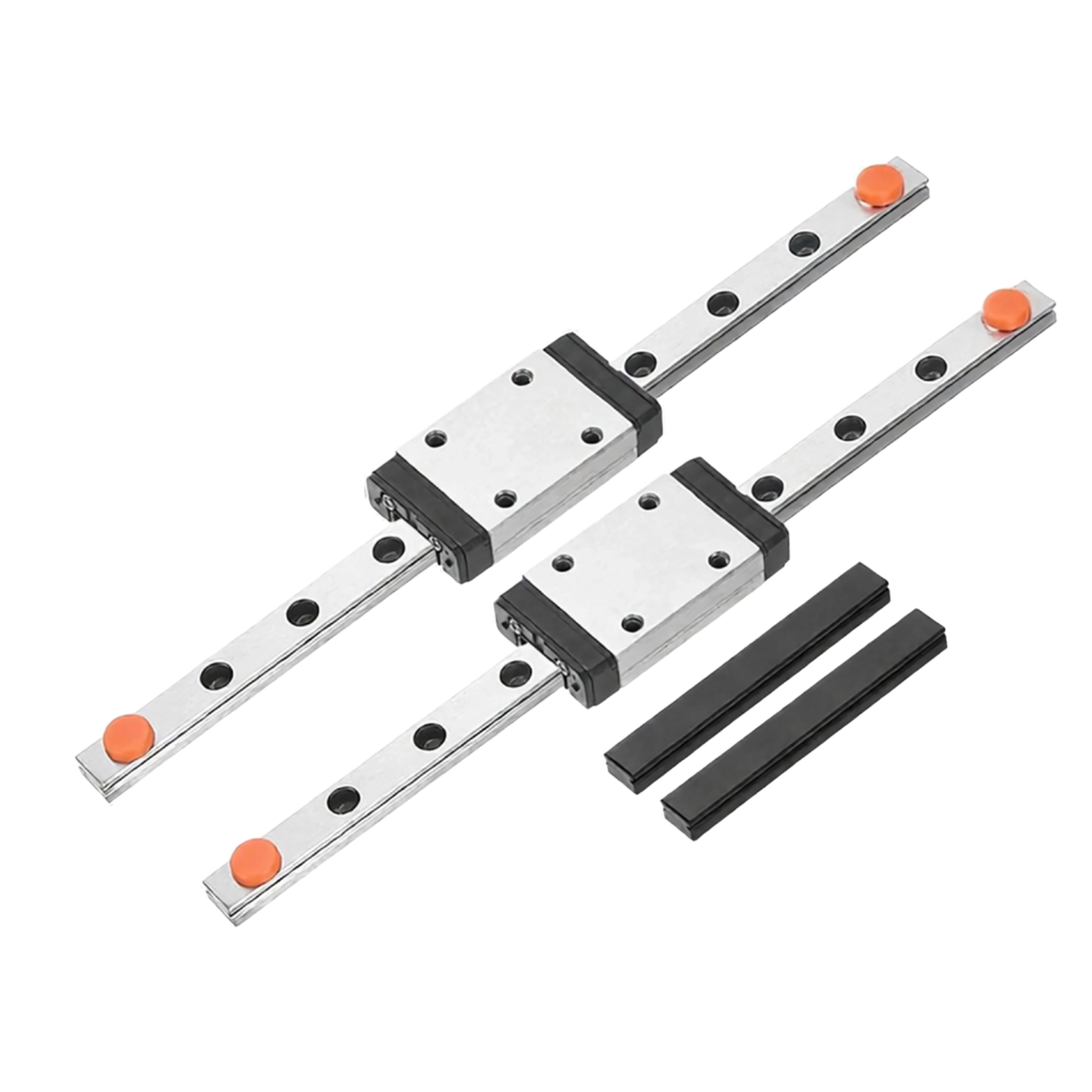
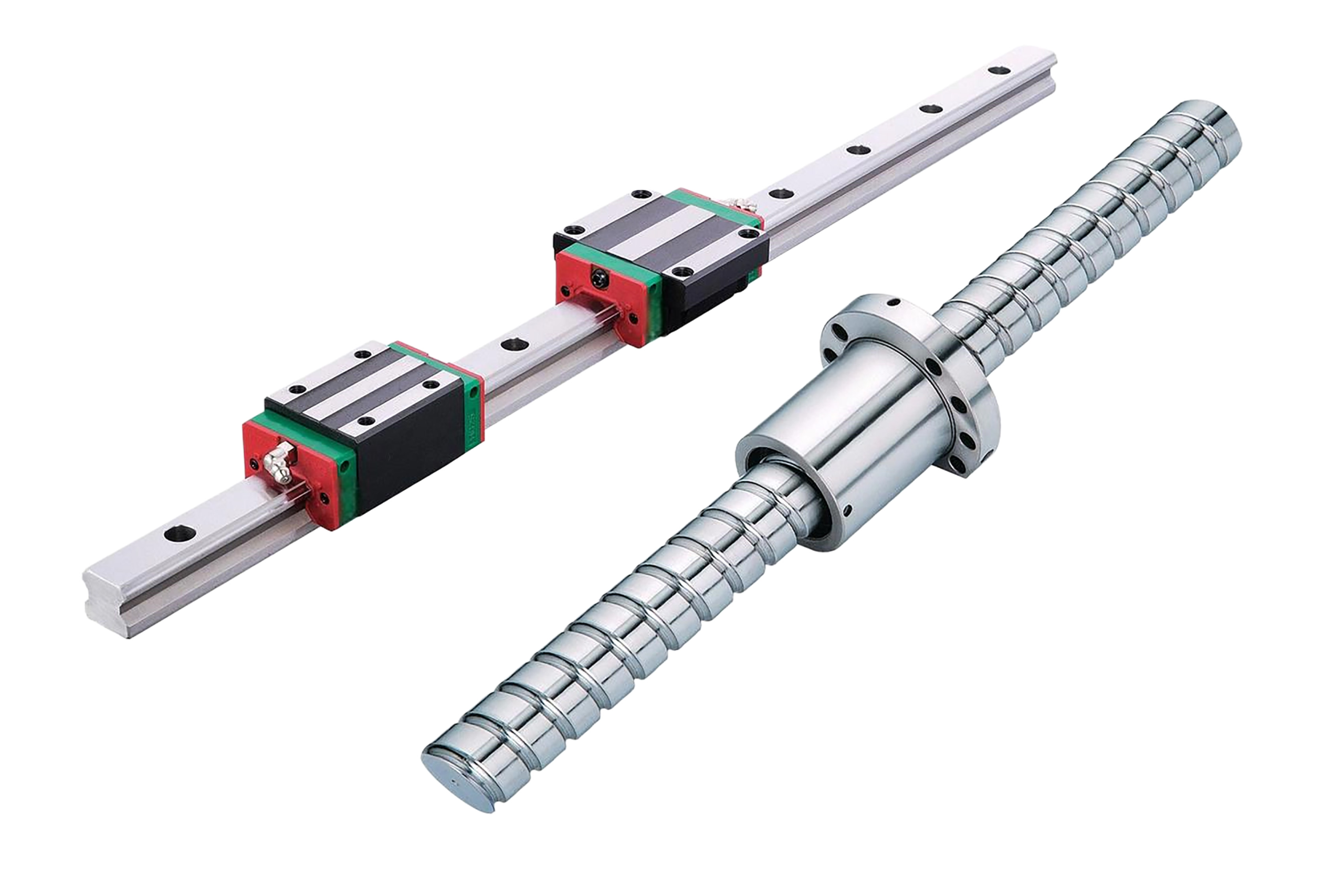
A linear guide bearing is a precision mechanical component designed to support and guide linear motion with minimal friction while maintaining exceptional positioning accuracy. Unlike traditional sliding mechanisms that rely on surface contact and generate significant friction, linear guide bearings utilize rolling elements such as steel balls or cylindrical rollers to create smooth, controlled movement along a hardened rail.
In modern industrial applications, linear guide bearings act as the backbone of motion systems, allowing machine components to move back and forth with remarkable repeatability. Whether installed in a CNC machining center, robotic assembly system, semiconductor inspection platform, or automated production line, these components provide the critical connection between mechanical stability and dynamic movement.
From an engineering perspective, a high-quality linear guide bearing does far more than simply reduce friction. It manages complex mechanical forces, including radial loads, reverse radial loads, lateral forces, and moment loads, while maintaining consistent travel accuracy throughout millions of operating cycles. That is the real value behind precision linear motion technology.
For global equipment manufacturers, selecting the right linear guide bearing is not just a component purchase; it is a decision that directly affects machine reliability, production efficiency, maintenance costs, and end-user satisfaction.
1.2 Main Components and Working Principles
A linear guide bearing system consists of several precision-engineered components working together as an integrated motion solution.
The primary components include:
Guide Rail
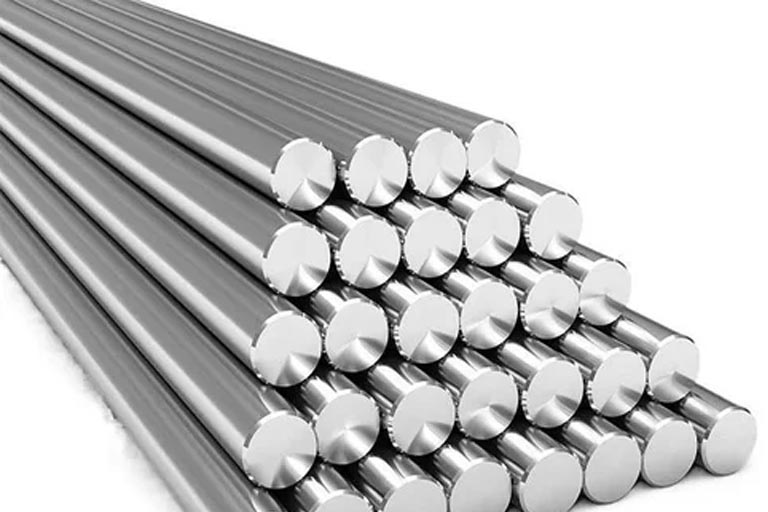
The guide rail provides the fixed pathway for linear movement. It is typically manufactured from high-carbon bearing steel and undergoes advanced heat treatment processes, including carburizing, quenching, and precision grinding.
A quality guide rail requires:
- High surface hardness
- Excellent wear resistance
- Stable dimensional accuracy
- Low deformation under load
The raceway geometry on the rail determines the contact condition between the rolling elements and the track, directly influencing load capacity and operational life.
Linear Guide Block
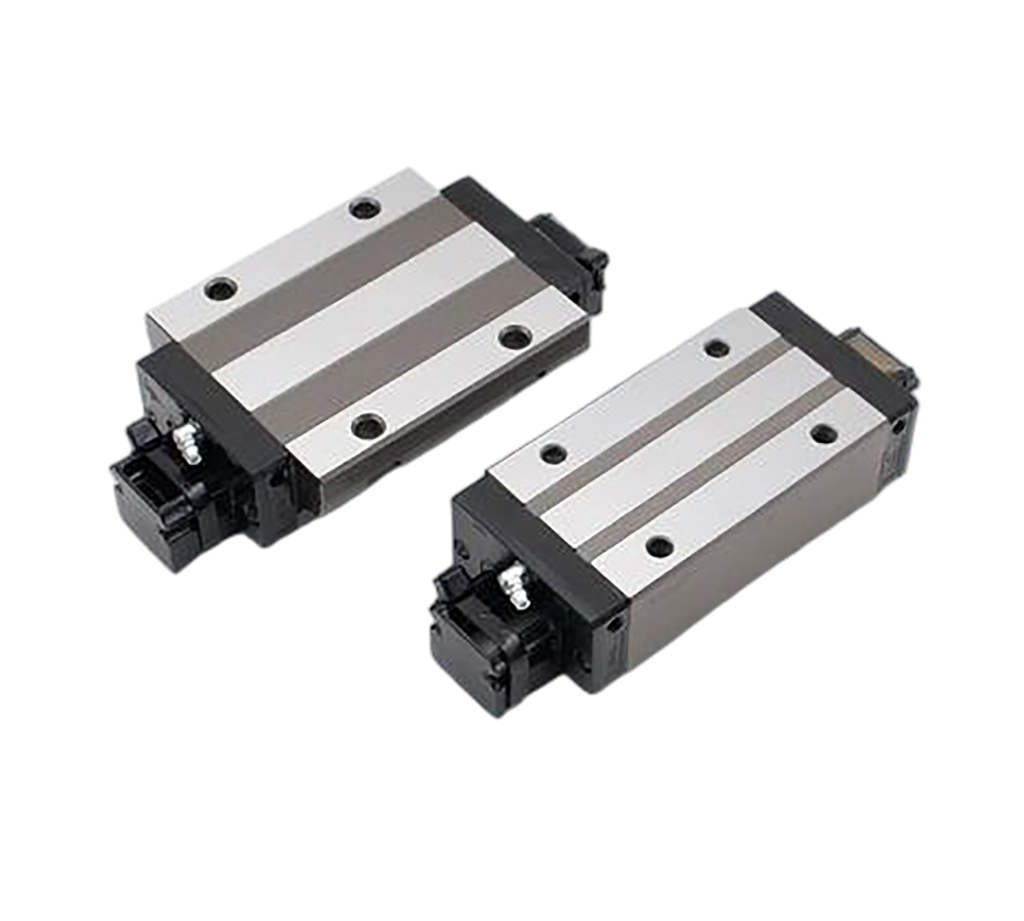
The guide block, sometimes called a carriage, travels along the rail and contains the internal rolling mechanism. It is engineered with optimized internal channels that allow balls or rollers to circulate continuously.
A typical guide block includes:
- Rolling element pathways
- Return channels
- End caps
- Sealing systems
- Lubrication reservoirs
The internal circulation design enables unlimited linear travel, making it suitable for automation systems requiring continuous movement.
Rolling Elements
The rolling elements are the heart of the system. Most linear guide bearings use either:
- Steel balls
- Cylindrical rollers
Ball-type linear guides provide excellent speed capability and smooth motion, while roller-type designs offer significantly higher rigidity and load capacity.
The working principle is simple but highly refined: rolling elements move between the rail and block, transforming sliding friction into rolling friction. This dramatically reduces resistance and allows machines to achieve faster movement with lower energy consumption.
1.3 Role of Linear Guide Bearings in Modern Industrial Equipment
As manufacturing continues moving toward automation, precision, and intelligent production, linear guide bearings have become a fundamental motion-control component across industries.
In CNC machining, linear guide bearings determine:
- Cutting accuracy
- Surface finish quality
- Machine positioning stability
In industrial robots, they support:
- Repeatable positioning
- Smooth axis movement
- High-speed operation
In semiconductor manufacturing equipment, they enable:
- Ultra-clean movement
- Micron-level positioning
- Vibration-controlled operation
The role of linear guide bearings has expanded from simple mechanical support to a performance-critical component influencing the entire machine ecosystem.
For equipment manufacturers, a small difference in guide accuracy or friction characteristics can translate into major differences in production output. A machine that runs smoothly for years versus one requiring frequent adjustment often comes down to the quality of its linear motion components.
2. Why Linear Guide Bearing Trends Matter for Global Buyers
2.1 Impact of Technology Development on Procurement Decisions
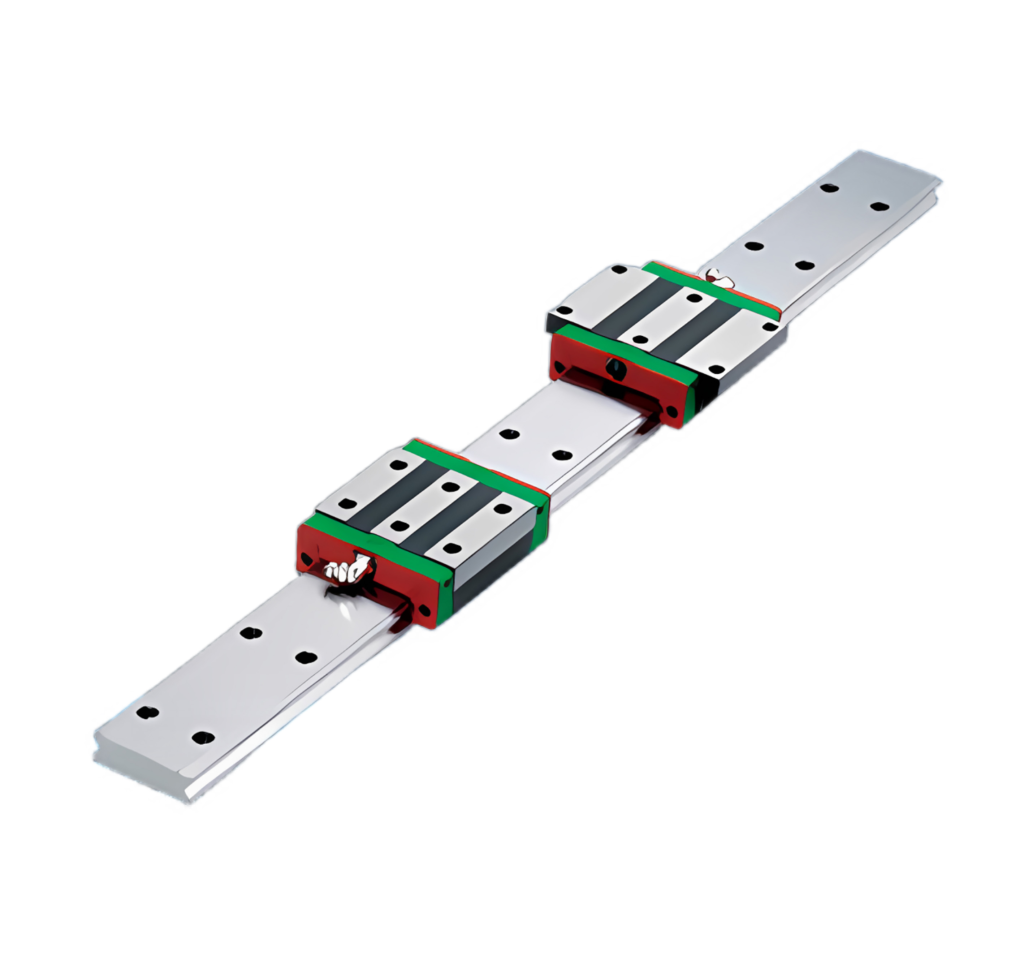
The linear guide bearing industry is evolving quickly due to advances in automation, robotics, and precision manufacturing. For procurement professionals, keeping up with these changes is no longer optional; it has become part of strategic sourcing.
Modern buyers are looking beyond basic specifications such as dimensions and load ratings. They are evaluating:
- Manufacturing technology
- Material innovation
- Supplier engineering capability
- Customization flexibility
- Long-term reliability
The old-school approach of choosing the lowest-cost supplier is becoming risky because a cheaper component can create hidden costs through machine downtime, replacement labor, and inconsistent production quality.
Today’s procurement teams are asking deeper questions:
- Can the supplier maintain batch-to-batch consistency?
- Can they support customized designs?
- Do they understand international quality requirements?
- Can they provide technical support during machine development?
Technology development has changed the buyer’s role from purchasing components to selecting engineering partners.
2.2 How Market Trends Influence Supplier Selection
Global manufacturing markets are becoming increasingly competitive, and brands are demanding more from their supply chains.
Several market trends are reshaping supplier evaluation:
Higher Quality Expectations
Industrial brands require components that can operate reliably under demanding conditions. Suppliers must demonstrate strict quality control, advanced machining capabilities, and stable production processes.
Shorter Development Cycles
Equipment manufacturers are launching new products faster than ever. They need suppliers capable of responding quickly with prototypes, samples, and customized solutions.
Global Compliance Requirements
International buyers increasingly consider:
- Material traceability
- Environmental standards
- Quality certifications
- Production transparency
A supplier’s ability to meet these expectations often becomes a deciding factor during vendor selection.
2.3 Key Factors Buyers Should Monitor Before Sourcing
Before selecting a linear guide bearing supplier, professional buyers should carefully evaluate several critical factors.
Technical Capability
A reliable manufacturer should have:
- Precision grinding equipment
- Heat treatment capability
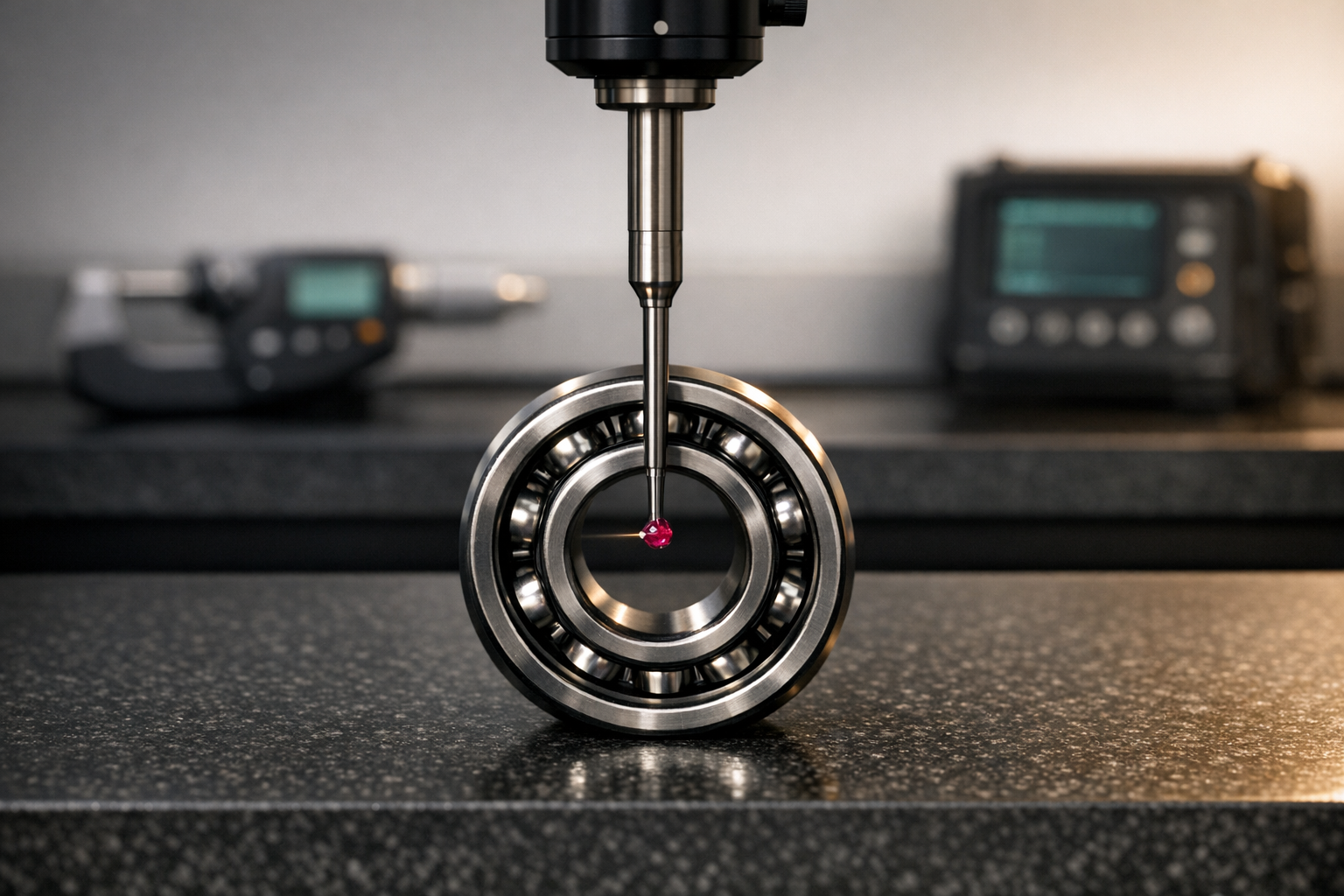
- Quality inspection systems
- Engineering support
Product Range
A strong supplier should provide multiple solutions:
- Miniature linear guides
- Heavy-duty linear guides
- Roller linear guides
- Stainless steel versions
- Customized designs
Production Stability
Consistency matters because industrial customers require predictable performance across thousands of units.
A supplier capable of maintaining stable tolerances and repeatable quality provides significant value for global brands.
3. Growing Demand for High Precision Linear Guide Bearings
3.1 Increasing Accuracy Requirements in Industrial Applications
Precision has become the defining characteristic of modern manufacturing.
Industries such as aerospace, semiconductor production, medical equipment, and advanced automation require motion systems capable of achieving extremely accurate positioning.
Linear guide bearings directly influence:
- Positioning error
- Repeatability
- Vibration levels
- Machining quality
For example, in semiconductor equipment, even microscopic positioning errors can affect product yield. In CNC machining, insufficient guide accuracy can result in dimensional deviations and poor surface quality.
This demand for higher accuracy is pushing manufacturers to develop advanced linear guide bearings with improved raceway geometry, tighter manufacturing tolerances, and enhanced preload control.
3.2 Precision Grades and Their Impact on Equipment Performance
Linear guide bearings are typically available in different precision grades depending on application requirements.
Common grades include:
- Normal grade
- High precision grade
- Precision grade
- Super precision grade
Higher precision levels provide:
- Lower running deviation
- Better repeatability
- Reduced vibration
- Improved machine stability
However, higher precision also requires more advanced manufacturing processes and stricter quality control.
Professional buyers must balance precision requirements with actual application needs. Over-specifying precision can increase costs unnecessarily, while under-specifying can negatively affect equipment performance.
3.3 Selecting High Precision Solutions for Brand Applications
For global equipment brands, precision is closely connected with reputation.
A machine failure caused by poor-quality linear motion components can damage customer trust and increase warranty costs.
When selecting precision linear guide bearings, buyers should consider:
- Application accuracy requirements
- Operating speed
- Load conditions
- Environmental factors
- Expected service life
Working with manufacturers that understand application engineering helps ensure the selected bearing is not only precise but also practical and cost-effective.
4. The Rise of Miniature Linear Guide Bearings
4.1 Demand Growth in Compact Automation Equipment
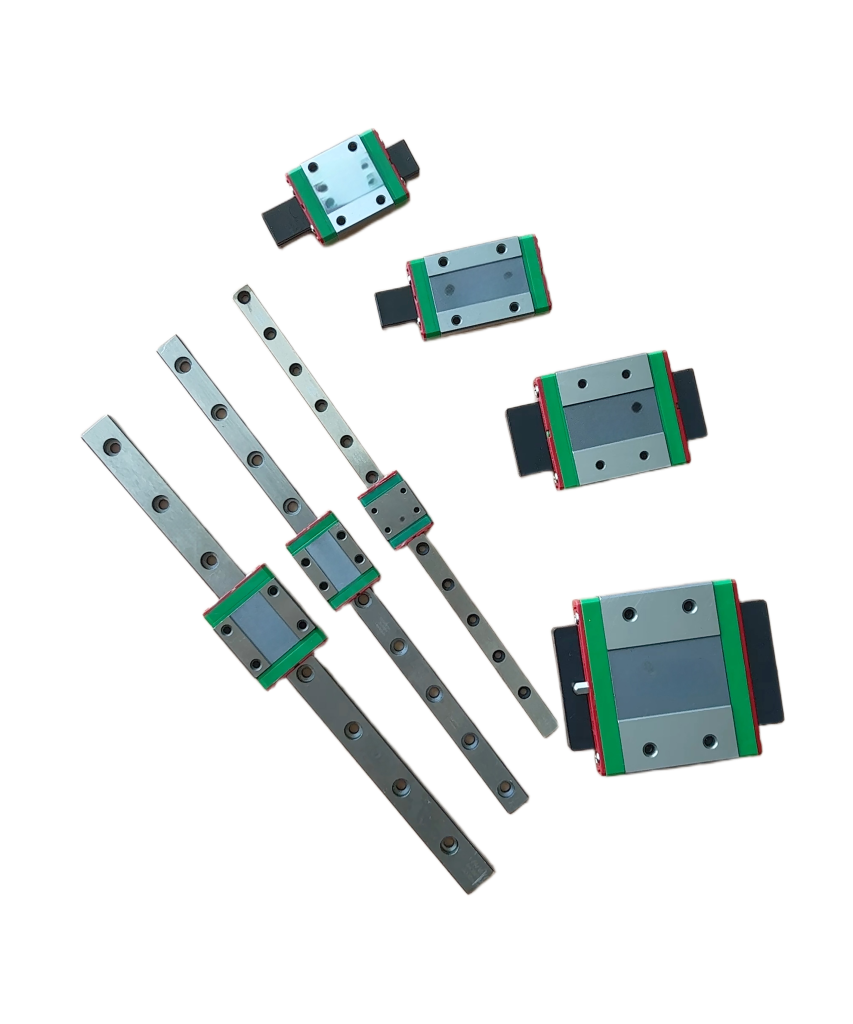
As industrial equipment becomes smaller and smarter, miniature linear guide bearings are experiencing rapid growth.
Modern devices such as:
- Electronic assembly machines
- Medical instruments
- Laboratory automation systems
- Semiconductor inspection equipment
require compact motion solutions without sacrificing accuracy.
Miniature guides provide manufacturers with the ability to design smaller machines while maintaining high positioning performance.
This trend reflects a broader shift toward lightweight, efficient, and space-saving industrial equipment.
4.2 Advantages of Miniature Designs for Space-Limited Systems
Miniature linear guide bearings offer several advantages:
- Compact dimensions
- Lightweight structure
- Low operating resistance
- High positioning accuracy
They are particularly valuable where installation space is limited but precision requirements remain demanding.
For equipment designers, miniature guides create greater flexibility in mechanical layouts and allow more compact product designs.
4.3 Procurement Considerations for Small Precision Components
Although miniature linear guides are physically small, they require extremely precise manufacturing.
Buyers should evaluate:
- Dimensional consistency
- Surface finishing quality
- Ball circulation performance
- Lubrication reliability
Small components often operate in highly sensitive systems, meaning minor quality variations can create major performance issues.
Choosing a supplier with strong micro-machining capabilities is essential for maintaining product reliability.
5. Development of Heavy Duty Linear Guide Bearing Solutions
5.1 Increasing Need for Higher Load Capacity Systems
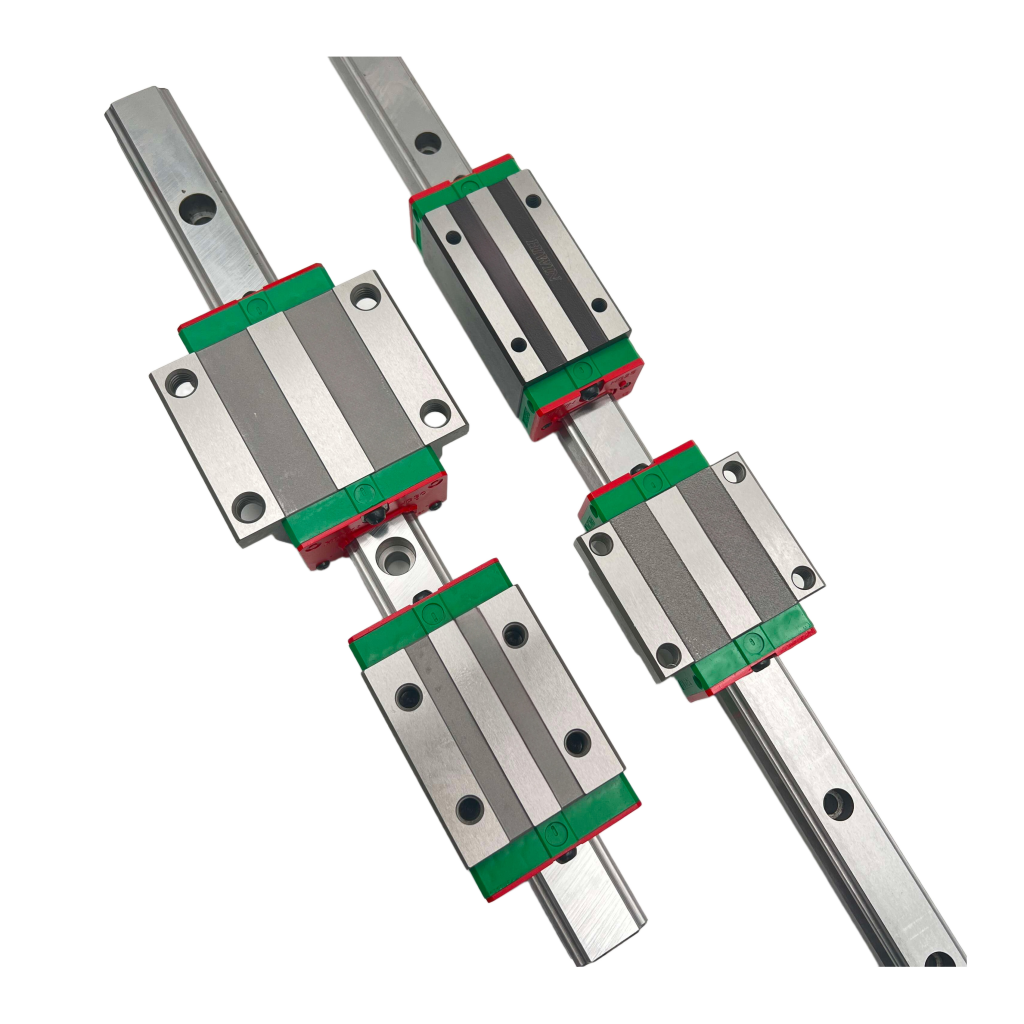
Industrial equipment continues becoming larger, faster, and more powerful, creating demand for heavy-duty linear guide solutions.
Applications requiring higher load capacity include:
- Large CNC machines
- Heavy automation equipment
- Industrial processing systems
- Aerospace manufacturing equipment
These applications require linear guides capable of handling significant forces while maintaining accuracy over long operating periods.
5.2 Roller Type Guides for Heavy Industrial Applications
Roller-type linear guides have become increasingly popular in demanding industrial environments.
Compared with ball-type designs, roller guides provide:
- Higher contact area
- Greater rigidity
- Improved load capacity
- Better resistance to shock loads
They are especially suitable for machines where cutting forces, vibration, and heavy loads are unavoidable.
5.3 Evaluating Durability and Long-Term Performance
For heavy-duty applications, durability is often the top purchasing priority.
Key evaluation factors include:
- Raceway hardness
- Roller quality
- Lubrication performance
- Fatigue resistance
- Manufacturing consistency
A high-quality heavy-duty linear guide bearing should maintain accuracy throughout millions of operating cycles, reducing maintenance requirements and improving overall equipment profitability.
6. Automation Industry Driving Linear Guide Bearing Innovation
6.1 Applications in Smart Manufacturing Equipment
The rapid expansion of smart manufacturing has become one of the strongest driving forces behind linear guide bearing innovation. As factories move toward automation, digitalization, and intelligent production models, motion components are being pushed to deliver higher precision, faster response times, and improved operational stability.
Modern automated equipment relies heavily on linear guide bearings for accurate and repeatable movement. They can be found in:
- Automated assembly machines
- Pick-and-place systems
- Packaging equipment
- Inspection platforms
- Battery production lines
- Industrial handling systems
In these applications, linear guides are not simply mechanical supports; they are precision motion platforms that determine the efficiency and reliability of the entire production process.
For example, an automated assembly line operating 24 hours per day requires linear guide bearings that can maintain consistent movement accuracy despite millions of repetitive cycles. Even a small increase in friction or positioning error can gradually reduce production efficiency and increase maintenance frequency.
The latest generation of linear guide bearings incorporates optimized raceway designs, improved sealing structures, and advanced lubrication technologies to meet the demanding requirements of Industry 4.0 manufacturing environments.
6.2 Requirements from Industrial Robots and Assembly Lines
Industrial robots and automated assembly systems place extremely high demands on linear motion components.
A typical robotic production system requires:
- High repeatability
- Smooth acceleration and deceleration
- Low vibration
- High dynamic load capacity
- Long maintenance intervals
Linear guide bearings used in robotic systems must handle frequent start-stop movements, rapid direction changes, and varying loads without losing accuracy.
Unlike traditional machinery that may operate under relatively stable conditions, robots often experience complex motion patterns. The bearing must withstand:
- Sudden acceleration forces
- Continuous reversing motion
- Moment loads caused by robotic arms
- Environmental contamination
This is why many robot manufacturers prefer precision linear guides with controlled preload, advanced surface treatment, and optimized rolling element circulation.
For procurement professionals, understanding these technical requirements is essential because the selected linear guide supplier directly impacts robot performance, productivity, and customer satisfaction.
6.3 How Automation Growth Changes Buyer Expectations
The growth of automation has fundamentally changed how global buyers evaluate suppliers.
In the past, purchasing decisions were mainly based on:
- Unit price
- Availability
- Basic specifications
Today, professional buyers focus more on:
- Engineering support
- Customization capability
- Consistent quality
- Supply chain reliability
- Long-term cooperation potential
Automation equipment manufacturers need suppliers who can participate during the early design stage, helping optimize bearing selection and improve overall machine performance.
A supplier that understands application challenges can provide more value than a simple component vendor.
In competitive markets, the winning suppliers are those capable of offering technical solutions rather than just products.
7. Linear Guide Bearings in Industrial Robotics Applications
7.1 Supporting Robot Accuracy and Repeatability
ndustrial robots are expected to perform thousands of precise movements every day, making accuracy and repeatability critical performance indicators.
Linear guide bearings contribute directly to robot performance by providing:
- Stable linear movement
- Reduced mechanical deviation
- Smooth positioning
- High structural rigidity
In applications such as robotic welding, painting, and material handling, even minor positioning errors can affect final product quality.
High-precision linear guides help maintain consistent movement paths, ensuring robots can repeat the same operation with minimal deviation over extended production periods.
This repeatability is especially important in industries such as automotive manufacturing, where production tolerances are extremely strict.
7.2 Bearing Requirements for Robotic Motion Systems
Robotic applications require specialized linear guide bearing characteristics.
Key requirements include:
High Rigidity
Robot systems often experience changing loads and dynamic forces. High rigidity prevents excessive deformation during movement.
Low Friction
Low friction improves:
- Energy efficiency
- Motion smoothness
- Servo motor response
Compact Design
Modern robots increasingly require smaller components with higher performance density.
Long Service Life
Because robots frequently operate continuously, bearing replacement can be costly and disruptive.
A properly selected linear guide bearing helps reduce downtime and improves the overall return on investment for automation equipment.
7.3 Future Opportunities in Robotic Automation Markets
The global robotics industry continues expanding, creating new opportunities for advanced linear guide bearing solutions.
Future demand will be influenced by:
- Collaborative robots
- Autonomous manufacturing systems
- Smart warehouses
- AI-driven production lines
These emerging applications require components that are:
- Smaller
- More precise
- More intelligent
- More energy efficient
As robots become more sophisticated, linear guide bearings will continue evolving from standard mechanical components into precision-engineered motion systems.
8.High Speed Linear Guide Bearing Development
8.1 Long Life Grease Lubrication Solutions
Lubrication is one of the most important factors affecting linear guide bearing performance and service life.
Traditional lubrication methods often require regular maintenance, but modern industrial equipment demands longer operating periods with fewer interruptions.
Advanced grease lubrication technologies provide:
- Extended service intervals
- Better oxidation resistance
- Improved temperature stability
- Reduced lubricant leakage
High-performance greases are specially formulated to maintain consistent viscosity under different operating conditions.
For automated production systems running around the clock, long-life lubrication can dramatically reduce maintenance frequency and improve equipment availability.
8.2 Self Lubricating and Maintenance Free Designs
The demand for maintenance-free motion systems is increasing, especially in industries where manual maintenance is difficult or expensive.
Self-lubricating linear guide bearings use specialized materials and structures to continuously provide lubrication during operation.
Applications include:
- Clean-room equipment
- Remote automation systems
- Medical devices
- High-speed production lines
Advantages include:
- Reduced maintenance labor
- Stable operating performance
- Longer service intervals
- Lower risk of lubrication failure
For equipment manufacturers, these designs provide a competitive advantage by improving machine reliability and simplifying customer maintenance requirements.
8.3 Lubrication Requirements for Different Industries
Different industries require different lubrication strategies.
General Automation
Typically requires:
- Standard industrial grease
- Reliable sealing
- Long service life
Semiconductor Manufacturing
Requires:
- Low particle generation lubricants
- Clean-room compatibility
- Minimal contamination
Food Processing
Requires:
- Food-grade lubricants
- Corrosion resistance
- Easy cleaning capability
High Temperature Applications
Requires:
- Heat-resistant lubricants
- Stable performance under extreme conditions
Selecting the correct lubrication system is essential because improper lubrication can reduce bearing life and compromise machine performance.
Summary:
Linear guide bearings are evolving with the growing demand for automation, precision, speed, and intelligent manufacturing. Global buyers now consider more than price and dimensions, focusing on accuracy, load capacity, service life, customization, and supplier reliability.
Key trends include high-precision and miniature designs, heavy-duty roller guides, low-friction technology, advanced materials, improved lubrication, high-speed performance, and smart condition monitoring. Robotics, CNC machinery, semiconductor equipment, and smart factories are driving these developments.
OEM and ODM buyers also increasingly require customized sizes, preload, materials, coatings, lubrication, and performance. At the same time, supply-chain stability, quality consistency, delivery reliability, technical support, and total cost are becoming critical sourcing factors.
Overall, linear guide bearings are moving toward higher precision, longer service life, lower friction, smarter monitoring, greater customization, and more resilient supply chains.