Table of Contents

Lee
Introduction to Cross Roller Bearings
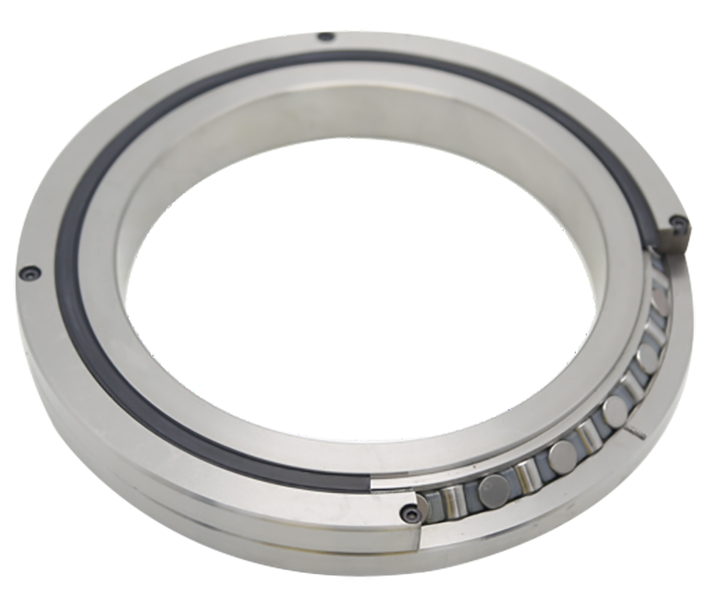
Cross rollers (often called crossed roller bearings) are a type of precision bearing designed to handle loads in multiple directions within a compact footprint. Instead of balls, they use cylindrical rollers that are oriented at alternating right angles (“crossed”) to one another, separated by spacers or cages.
Here’s the key breakdown:
Structure
The rollers are arranged at 90° angles in a single raceway.
Each roller alternates orientation (one faces north-south, the next east-west).
This cross pattern allows them to support radial, axial, and moment loads simultaneously.
Performance Characteristics
High rigidity: Because rollers make line contact (not point contact like balls), stiffness is excellent.
Compact size: One crossed roller bearing can replace two conventional bearings in some applications.
Smooth rotation: The roller and spacer arrangement minimizes skewing and friction.
Precision: Often used in applications requiring exact positioning.
Applications
Robotics – for joints and arms where compactness and accuracy are crucial.
Machine tools – rotary tables, spindles, and measuring instruments.
Medical imaging equipment – CT/MRI gantries.
Aerospace and optics – where high precision and rigidity are mandatory.
Cross roller bearings are increasingly being applied in robots and drones because of their unique characteristics, which enable them to withstand complex multi-directional forces in compact spaces.
🔹 In Robots
Joints & Articulations: Crossed roller bearings are commonly installed in robot arms, particularly in the wrist and elbow joints, where they must withstand axial, radial, and moment loads simultaneously as the arm moves with precision.
High Rigidity: Their line contact and alternating 90° roller arrangement give them greater stiffness than ball bearings, which ensures precise positioning—critical for welding robots, pick-and-place systems, and surgical robots.
Compact Design: Because a single cross roller bearing can replace two conventional bearings, robots can be built with lighter, more compact joints, improving energy efficiency and payload-to-weight ratio.
🔹 In Drones
Gimbal Stabilization: Drone cameras and LiDAR gimbals use cross roller bearings because they allow smooth rotation with minimal play, enhancing image stability and scanning accuracy.
Load Distribution: When drones carry payloads (e.g., mapping sensors or delivery packages), cross roller bearings help distribute forces evenly across axes, reducing vibration and extending equipment lifespan.
Durability in Lightweight Frames: Since drones must minimize weight without sacrificing performance, crossed roller bearings offer an ideal balance of compactness, strength, and precision.
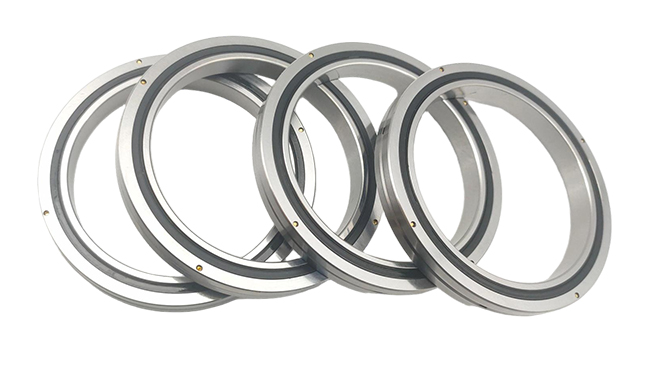
Compact Design Integration
Space efficiency in drone chassis
Space efficiency in drone chassis
Cross roller bearings are exceptionally compact, allowing engineers to save valuable space within the drone chassis. By minimizing the footprint required for rotational components, drones can incorporate additional features such as sensors, cameras, or communication modules without enlarging the overall size. This compactness is particularly critical in commercial and industrial drones where size constraints are strict.
Lightweight support without compromising strength
Despite their small size, cross roller bearings deliver strong support to rotating parts, enabling drones to maintain structural integrity without adding excessive weight. Lighter drones improve battery life and overall flight time, creating a cost-effective solution for brands focused on performance efficiency. Strength and lightness combined allow for better design flexibility and reliability.
Simplified assembly process
Cross roller bearings’ precision manufacturing ensures that assembly is straightforward, reducing labor time and error potential during drone production. Standardized dimensions and mounting options allow brands to streamline manufacturing and reduce production costs while maintaining high-quality performance. Ease of assembly also supports scalable production for large orders.
High Load Capacity
Handling axial and radial loads simultaneously
The unique configuration of cross roller bearings enables them to manage both axial and radial loads at the same time, which is crucial in drones that experience multidirectional forces during flight. This dual-load capacity ensures that drones maintain stability even when carrying payloads or encountering strong gusts of wind. Brands benefit from integrating a single component that supports multiple force types.
Resistance to impact forces during flight
Cross roller bearings provide enhanced durability against sudden shocks and vibrations, such as landing impacts or collision avoidance maneuvers. Their robust design prevents premature wear and maintains precise rotational motion, which extends the lifespan of the drone and reduces maintenance costs.
Enhancing payload capabilities
With higher load tolerance, drones can carry heavier payloads such as high-resolution cameras, LiDAR units, or additional sensors without compromising flight stability. This opens up commercial opportunities for brands to offer versatile, high-performance drones suitable for varied applications.
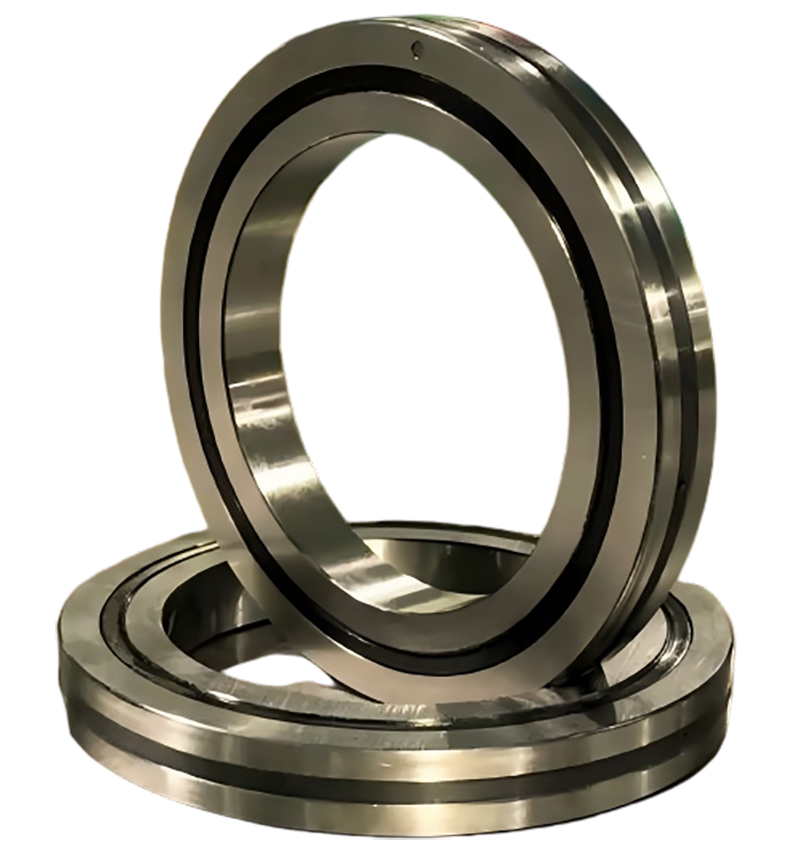
Superior Rotational Accuracy
Precision in gimbal and camera stabilization
Cross roller bearings’ inherent design allows for minimal backlash and precise rotation, which is critical for gimbal systems that stabilize cameras during flight. Accurate stabilization ensures high-quality imaging and reliable data collection, enhancing the drone’s professional appeal.
Smooth flight control response
By providing consistent and precise rotation, cross roller bearings improve the responsiveness of the drone’s flight control system. This ensures that pilots or autonomous systems experience smooth maneuvering, reducing the risk of overshoot or instability.
Minimizing vibrations for better sensor data
Drones often carry sensitive equipment such as accelerometers, gyroscopes, and imaging sensors that require vibration-free operation. Cross roller bearings reduce micro-vibrations, ensuring data accuracy and overall drone performance, which is essential for industrial and surveying applications.
Extended Service Life
Reduced wear due to cross roller configuration
The alternating roller design evenly distributes stress across the bearing, reducing localized wear and extending service life. This configuration minimizes maintenance frequency, keeping operational costs low for commercial drone operators.
Longevity under continuous operation
Drones used for surveying, delivery, or inspection often operate continuously for long periods. Cross roller bearings can handle these prolonged operational demands without significant degradation, providing reliable performance over time.
Lower replacement frequency and cost
With their extended lifespan, cross roller bearings reduce the need for frequent replacements, lowering long-term costs for brands and end-users. This cost-effectiveness improves profitability and makes high-quality drones more accessible.
High Rigidity Performance
Maintaining structure stability during maneuvers
Cross roller bearings provide exceptional rigidity, allowing drones to maintain structural stability even during aggressive maneuvers or high-speed flight. Stability translates to smoother performance and improved operational safety.
Resistance to deformation under stress
The robust construction of cross roller bearings prevents deformation under load, ensuring consistent precision for rotational elements. This resilience supports larger drones and those carrying heavier payloads, maintaining reliability in challenging conditions.
Enhancing aerodynamic performance
High rigidity reduces unwanted flex in the drone frame, enabling more precise aerodynamic control and better energy efficiency. Efficient airflow and minimal structural deflection improve speed, maneuverability, and overall flight performance.
Versatile Orientation Applications
Multi-axis motion support
Cross roller bearings excel in multi-axis applications, making them ideal for drones that require complex gimbal movements or articulated rotor systems. This versatility supports advanced aerial capabilities without introducing design complexity.
Flexible mounting positions in compact drones
Due to their compact and modular design, these bearings can be integrated into various positions within the drone chassis. Engineers can optimize space usage while still achieving precise rotational functionality.
Adapting to dynamic flight requirements
Whether drones are performing agile inspection routines or stable aerial photography, cross roller bearings adapt seamlessly to changing operational demands. This adaptability reduces the need for additional mechanical solutions, keeping production cost-effective.
Low Maintenance Requirements
Reduced lubrication frequency
Cross roller bearings require minimal lubrication due to their precise rolling elements and hardened surfaces, reducing maintenance intervals and operational downtime. Brands benefit from decreased servicing costs and simplified lifecycle management.
Simplified inspection protocols
Routine inspections are easier with cross roller bearings because they maintain consistent performance over long periods. Clear wear indicators and predictable behavior allow technicians to plan preventive maintenance efficiently.
Minimizing operational downtime
Reduced maintenance demands translate to higher uptime for drones, which is critical for commercial and industrial operations. Long-term, this supports consistent productivity without compromising reliability.
Noise Reduction Benefits
Quiet operation for surveillance drones
Cross roller bearings operate smoothly and quietly, which is advantageous for surveillance or wildlife monitoring drones where stealth is critical. Low noise contributes to discreet and effective operations.
Reducing mechanical vibration noise
By minimizing vibration transmission, these bearings reduce mechanical noise, improving both the user experience and equipment longevity. This quiet operation enhances the perceived quality of the drone.
Enhancing stealth performance
Reduced operational noise supports tactical applications where drones need to operate undetected. For brands targeting defense or research sectors, noise reduction is a key differentiator.
Temperature and Environmental Resistance
Operating in high and low temperatures
Cross roller bearings maintain performance across a wide temperature range, enabling drones to operate in extreme environments, from cold alpine zones to hot desert conditions. This flexibility enhances product reliability.
Resistance to dust and moisture infiltration
Sealed and precision-engineered bearings resist contaminants such as dust, dirt, and moisture, maintaining smooth operation and extending the life of critical drone components. This feature reduces failure rates and maintenance costs.
Maintaining consistent performance in harsh conditions
Reliable operation in adverse environments ensures drones can meet industrial, agricultural, and mapping requirements without unexpected downtime or service interruptions. Brands can confidently market ruggedized solutions.
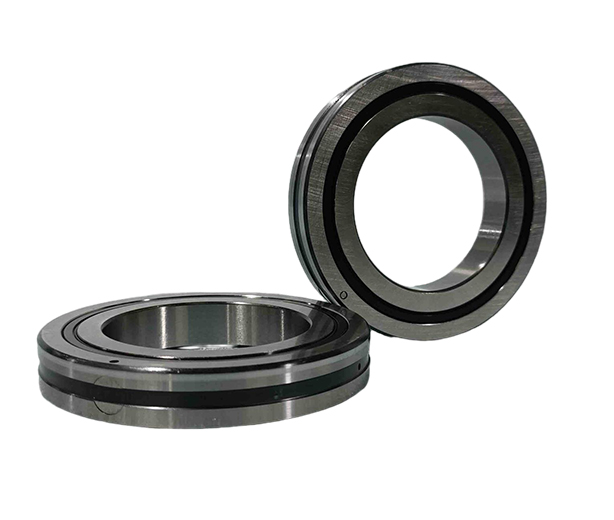
Summary: The cross roller bearings, with their compact structure, high load-bearing capacity and excellent rotational accuracy, help unmanned aerial vehicles achieve higher stability and performance within limited spaces. Their long lifespan, high rigidity and multi-directional applicability not only ensure the reliability of flight but also reduce maintenance frequency and replacement costs.
Meanwhile, its low noise, environmental resistance capabilities, and cost-effectiveness make it an ideal choice for drone manufacturers and brands in large-scale production. Whether it is to enhance endurance, increase payload capacity, or expand application scenarios, the cross roller bearings can provide practical and long-term advantages for drone design.